





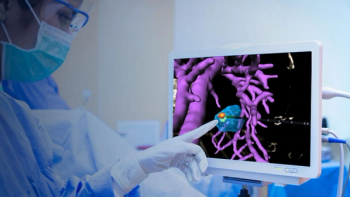
Through the use of artificial intelligence (AI) and imaging modalities such as ultrasound, CT, and MRI, the newly FDA-cleared VisAble.IO software reportedly enhances planning and real-time assessment for liver tumor ablation procedures.


FDA Clears AI Software for CT Detection and Triage of Obstructive Hydrocephalus

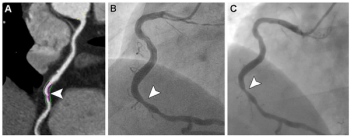
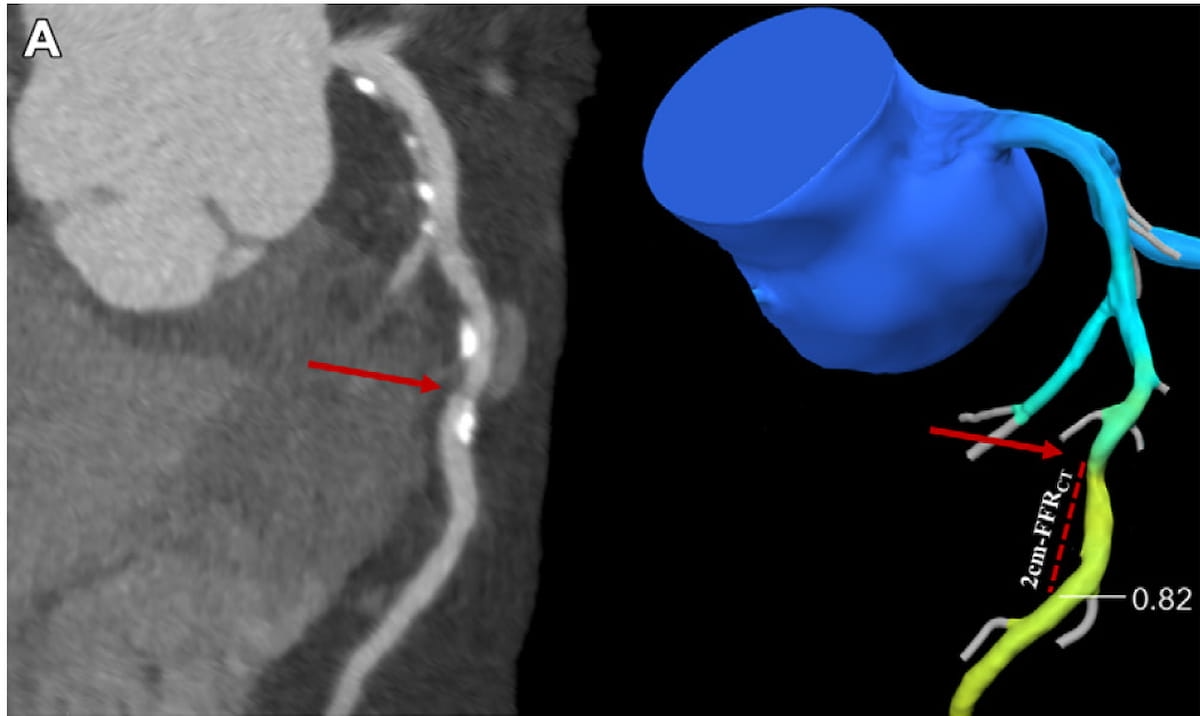
Study: CCTA-Derived Fractional Flow Reserve Can Predict MI and Mortality Risks in Patients with Stable Angina

Through the use of artificial intelligence (AI) and imaging modalities such as ultrasound, CT, and MRI, the newly FDA-cleared VisAble.IO software reportedly enhances planning and real-time assessment for liver tumor ablation procedures.

Catch up on the top radiology content of the past week.

Catch up on the top radiology content of the past week.

A high lipid core burden in non-revascularized plaque is associated with nearly a 13-fold higher risk of major adverse cardiovascular events (MACEs) such as cardiac death and myocardial infarction (MI), according to new research based on coronary computed tomography angiography (CCTA) findings.

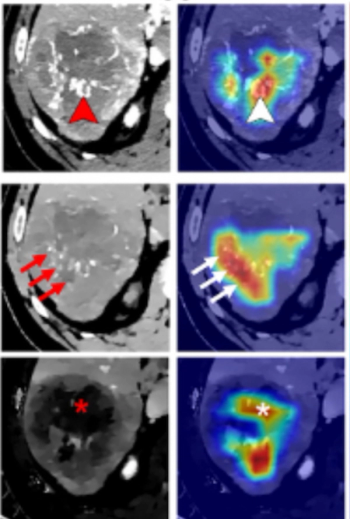
In comparison to clinical-radiologic assessment, a deep learning CT radiomics nomogram had a 10 percent higher AUC and a 27 percent higher specificity for predicting the macrotrabecular massive subtype of hepatocellular carcinoma in external data testing.

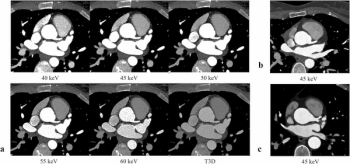
Emerging research suggests that achieving an optimal virtual monoenergetic image (VMI) energy level with photon-counting computed tomography (CT) may allow up to a 40 percent reduction of contrast media dosing for coronary CT angiography.

Catch up on the top AI-related news and research from the past month.

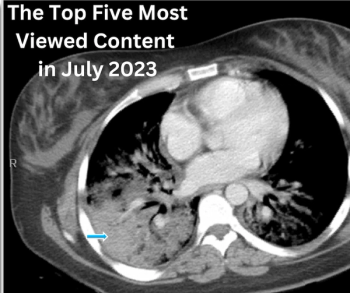
Catch up on the most viewed content at Diagnostic imaging in July 2023.

Catch up on the top radiology news of the past week.

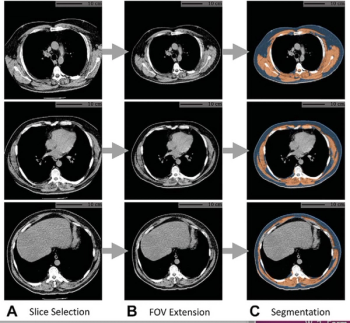
In a study of over 20,700 people, researchers found that artificial intelligence (AI) analysis of body composition measurements via lung cancer screening computed tomography (CT) exams improves the prediction of mortality risks for lung cancer, cardiovascular disease, and all-cause mortality.

Catch up on the top radiology news of the past week.

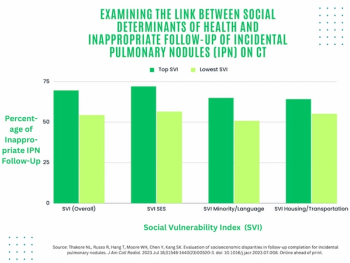
In a study of nearly 2,500 patients with incidental pulmonary nodules (IPN) on chest computed tomography (CT) exams, 69.5 percent of those in the highest quartile of the CDC’s Social Vulnerability Index (SVI) had inappropriate IPN follow-up in comparison to 54.3 percent of those in the lowest quartile of the CDC SVI.

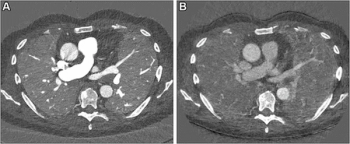
Review the case study and test your knowledge to make the correct diagnosis.

Catch up on the top radiology content of the past week.

For conditions ranging from interstitial lung disease and post-COVID-19 complications to idiopathic pulmonary fibrosis, photon-counting computed tomography (PCCT) facilitates simultaneous functional and morphologic lung assessment at lower radiation dosing than conventional chest CT, according to newly published research.
Superfluous pan scans have become standard for a vast majority of minor injury presentations in emergency room settings.

Catch up on the top radiology content of the past week.

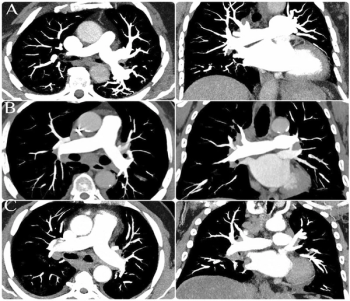
New research suggests the use of high-pitch photon-counting computed tomography (PCCT) facilitates similar image quality and attenuation in the pulmonary trunk at lower iodinated contrast media (ICM) dosing levels ranging from 35 to 60 ml.

Review the case study and test your knowledge to make the correct diagnosis.

Catch up on the top AI-related news and research from the past month.

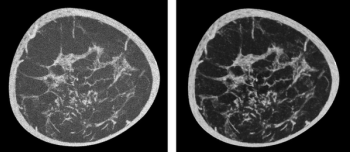
The artificial intelligence (AI) software facilitates high-resolution three-dimensional computed tomography (CT) images of the breast.

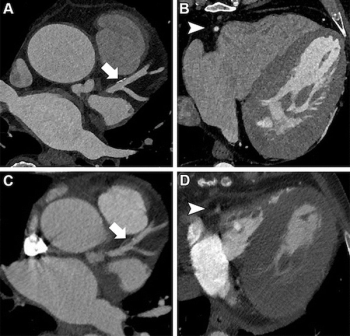
In a study cohort of patients undergoing pre-operative workup for transcatheter aortic valve replacement (TAVR), researchers found the use of photon-counting CT for ultra-high resolution coronary CT angiography had a 96 percent sensitivity rate and an 84 percent specificity rate for the detection of coronary artery disease (CAD).

Catch up on the top radiology content of the past week.

In a recent video interview from the Society for Imaging Informatics in Medicine (SIIM) conference, Ali Tejani, M.D., discussed pertinent insights on leveraging the value of adjunctive artificial intelligence (AI)-enabled triage software for computed tomography (CT) scans with radiology workflow improvements to achieve “clinically meaningful change” for patients with incidental pulmonary emboli findings.

Review the case study and test your knowledge to make the correct diagnosis.