










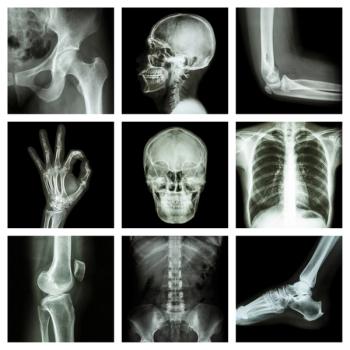
Digital tomosynthesis versus DR following hand and wrist surgery with hardware.
Digital tomosynthesis versus DR following hand and wrist surgery with hardware.
Breast cancer incidence in women in their 40s supports the recommendation for annual screening from age 40.
Case History: 28-year-old female with left breast pain and swelling two years after augmentation mammoplasty.

Using breast MR imaging among women with ductal carcinoma in situ provides better depiction of invasive breast cancers.
Case History: 49-year-old female presented with palpable right breast retroareolar mass.

Breast MRI in pregnancy-associated breast cancer may change the surgical management of patients.
Implementing simple interventions could significantly decrease screening mammography recall rates.
Informed decision making for this older women regarding breast cancer screening should be a public health priority.
CAD-measured peak enhancement at preoperative MRI of women with primary operable breast cancer and outcomes.
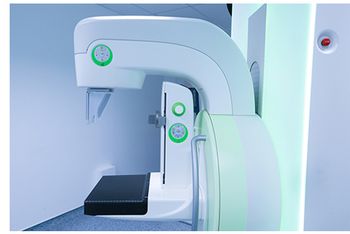
Synthetic vs digital 2D mammograms in assessing breast tissue density.
Effect of breast density on mammography radiation dose.
Annual MRI screening and cancer detection among women under 50 who had breast conservation therapy following breast cancer.
UPDATED. Many states have laws on breast density notification after mammography screening – but not all notification is the same.
The value of screening mammography when added to screening MRI in women who are at high risk for breast cancer.
Mammography screening women regularly at age 50 results in many women in their 40s not being diagnosed with breast cancer.
Combining tomosynthesis plus digital mammography screening’s effect on cancer detection and recall rates.
Digital mammography breast density estimates compared with standard-dose mammography.

Breast density legislation is still causing confusion and controversy among radiologists.
An abbreviated MRI protocol is effective in detecting breast cancer and saving resources.
Imaging for breast pain is not usually recommended, however, ultrasound may be appropriate for women with focal, noncyclic pain.
Readers with fewer than 10 years' experience benefit the most of adding DBT to 2D conventional screening mammography.
CT-Guided VAB outperforms prone stereotactic biopsy for fastest breast tissues biopsy.
Sub-harmonic aided pressure estimation and sub-harmonic imaging can correctly predict responses after 10% chemotherapy completion.
Breast cancers detected by screening mammography do not spontaneously disappear.
Additional MR screening helps identify previously undiagnosed breast cancers in women with average lifetime risk.