












The impacts of the pandemic have been long-lasting – what has the effect been, and what prompts patients to return.
The impacts of the pandemic have been long-lasting – what has the effect been, and what prompts patients to return.
Dangers of missing one screening mammogram; Rise of cardiac CT and MRI; Strategies to improve financial stability; Plus, Talking to patient about COVID-19 vaccine-related adenopathies.

Experts at ECR 2021 offer their top three tips for a variety of breast imaging techniques.
For women with dense breasts, automated breast ultrasound offers advantages over supplemental screening with hand-held ultrasound.

Radiologists can play an active role in improving the healthcare experience for transgender patients, most of whom have had a negative imaging encounter.
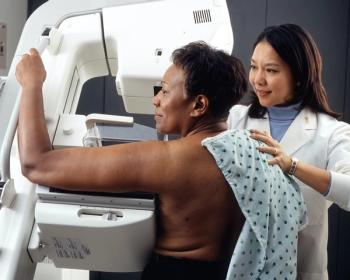
Women who do not miss their screening mammography appointments are far less likely to die from breast cancer than women who either forego one – or all – exams.

Here's what to expect this week on Diagnostic Imaging.
Radiologists may not order a DBT exam for African American patients, but they can participate in improving access to the screening.

For women who do not have easy access to mammography, clinical breast examination has been shown to increase breast cancer detection and save lives.
The approach, based on ACR guidance, is intended to promote vaccine use while reducing patient anxiety and unnecessary imaging.

While digital breast tomosynthesis improves cancer detection and recall rates among women of all ages and races, significantly fewer African American women have access to the exam.

Women with less education, with lower income, or from racial and ethnic minority groups have less access to 3D mammography and the potential benefits it provides.
Mammography "Sweet Spot" Recall Rate; MRI for Early-Stage Testicular Cancer Follow-Up; COVID-19 and Body Self-Attack; Plus, Global Radiology
The currently acceptable 12 percent-to-14 percent recall rate is too high to maximize cancer detection and minimize biopsies and unnecessary follow-up studies.
COVID-19 Vaccine-Related Adenopathies on Breast MRI; Baseline Mammography at 40; Cherenkov Imaging to Improve Radiation Therapy Improvement; and Sexual Harassment and Gender Discrimination in Radiology

Study shows that baseline mammography screening to identify breast density, starting at age 40, is cost-effective.
After more than two decades, women between ages 20 and 39 are seeing a slight increase in the rates of breast cancer mortality.
Here's what to expect this week on Diagnostic Imaging.
Female breast cancer diagnosis is now the most common cancer diagnosis globally, largely affecting women in transitioning countries.

When deciding whether to continue screening mammography with older breast cancer survivors, consider life expectancy, experts said.
A focus on more comprehensive, up-to-date research and inclusion of racial disparities data will lead to more appropriate mammography screening guidelines, experts say.
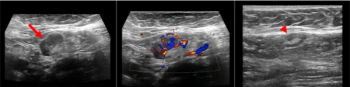
With more axillary adenopathies likely to present on breast imaging, Society of Breast Imaging experts offer guidance for best management during the pandemic.

What could happen if the subject of discussion is a widely used radiology exam?
Here's what to expect this week on Diagnostic Imaging.
Swollen lymph nodes visualized on mammography and ultrasound appear days post-vaccination and could be mistaken for malignancies.