






Catch up on the top radiology content of the past week.

Catch up on the top radiology content of the past week.
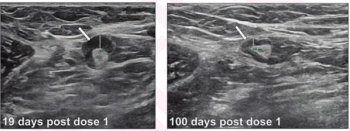
While COVID-19 vaccine clinical trials noted that post-vaccine axillary lymphadenopathy lasted for one to 10 days, emerging breast ultrasound research found a mean resolution of 127 days after a first vaccine dose.
Check out top radiology content from the past week.
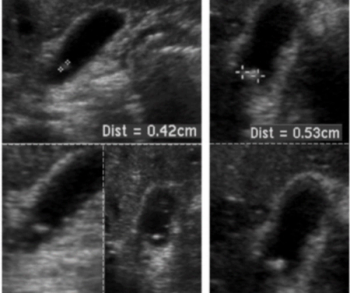
Based on findings from what may be the first longitudinal study of gallbladder polyps in patients with underlying liver disease, researchers suggested that size change thresholds for cholecystectomy may need to be reevaluated.
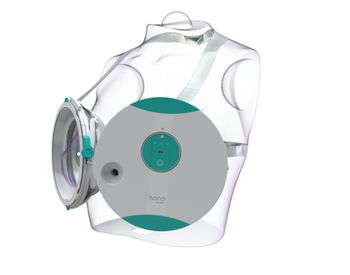
The portable ATUSA™ System reportedly provides 3D ultrasound visualization of the entire breast volume in two minutes.
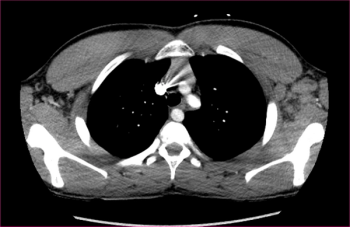
Lung opacities/consolidation and cervical/axillary adenopathy are reportedly common findings in emergency room imaging of patients suspected of having complications related to COVID-19 vaccines, according to new research presented at the American Roentgen Ray Society (ARRS) conference.
Review top radiology content from the week.
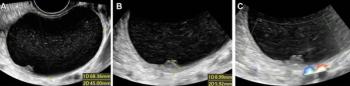
A new study suggests that deep learning algorithms with multimodal ultrasound have comparable specificity and sensitivity to subjective expert assessment and use of the O-RADS classification to distinguish between benign and malignant ovarian tumors.

What is your diagnosis?
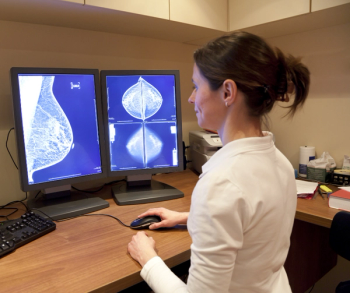
Validating a prognostic scoring system for locoregional recurrence risk in post-mastectomy patients with varying levels of axillary lymph node involvement, emerging research suggests patients with intermediate risk for breast cancer recurrence could benefit from post-mastectomy radiotherapy.
Review top radiology content from the week.
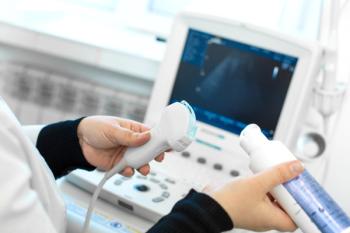
Preliminary ultrasound findings from a study of over 3,000 women in early pregnancy found no association between fetal anomalies and initial COVID-19 vaccination.
What is your diagnosis?
Review top radiology content from the week.

Powered by artificial intelligence, the new Ultrasound Workspace platform reportedly offers advanced echocardiography capabilities and facilitates enhanced diagnostic workflows.

What is your diagnosis?
Review top radiology content from the week.
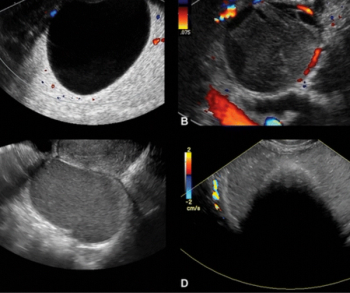
Distinguishing between classic and non-classic presentations of isolated adnexal lesions on pelvic ultrasound reportedly had a high specificity and sensitivity in diagnosing ovarian cancer in women at average risk.

Review top radiology content from the week.
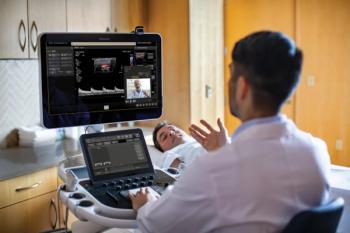
The expanded FDA clearance for Collaboration Live (Philips) gives clinicians the option to consult on or diagnose ultrasound images from their mobile devices.
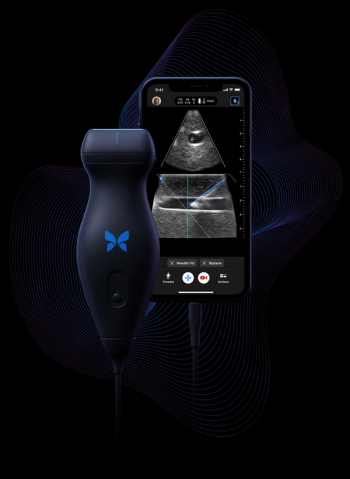
In combination with cloud-based data infrastructure and artificial intelligence (AI) applications, handheld ultrasound devices may have the potential to significantly enhance efficiency for providers and contribute to improved patient outcomes.
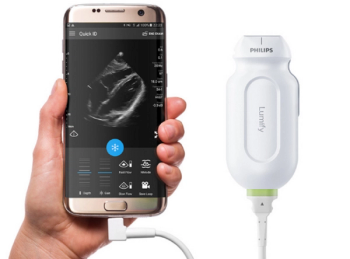
In addition to newly added advances with hemodynamic assessment and obstetric measurements, Lumify also offers a B-line quantification tool and AI-enhanced algorithms that may bolster ultrasound lung imaging in severe COVID-19 cases.
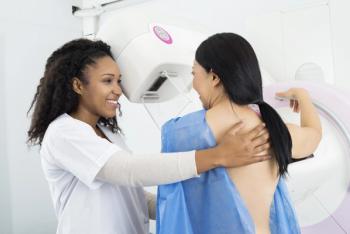
Emerging research suggests that mammograms should not be delayed for women who develop unilateral lymphadenopathy after receiving COVID-19 vaccines, and that follow-up imaging is unnecessary for patients who have no history of cancer or suspicious concurrent symptoms.
What is your diagnosis?
During the pandemic and beyond, working from home as a radiologist can present clear work-life advantages.