








Facility Management

Latest News


Because of all the attention currently focused on radiation dose, a California imaging bill addressing radiation exposure has the potential to spread like wildfire to other states. California is a state that doesn’t wait for others to address a problem, so it’s possible similar bills could pop up around the country. The bill has passed the California senate and is now in the California Assembly Appropriations Committee with a hearing set for Aug. 4. Sen. Alex Padilla (D-Pacoima) is lead sponsor of the bill.

From the hospital's perspective, a radiology group's quality is measured by quality assurance reporting, working well with others, participating on medical staff committees, and other administrative duties. Still, a highly competent radiology practice, one with "quality" radiologists, can lose a contract over basic service issues, nonphysician interpersonal relationships, or other common administrative expectations.

In a previous radiology lifetime (not so long ago), geography was the friend of the radiology group with an exclusive hospital professional services agreement. Life was tidier then, with turf carved out in a relatively collegial fashion among radiology practices who maintained a gentleman’s agreement not to compete across certain lines. Geographic distribution and a “moat” of agreed-upon boundaries provided a level of strength so groups could also exhibit an adversarial stance when dealing with hospital administration. And they frequently did. They also tolerated bad behavior among members of the group and, in some cases, seemed to view their contracts as entitlements.

Not even two months have passed since a private equity firm snagged teleradiology provider Virtual Radiologic, but in that time the imaging industry has played host to several other such deals. The most recent was a bid by Hologic, announced earlier this week, to acquire privately held Sentinelle Medical. Others are Sonosite’s purchase of a different Canadian company, VisualSonics of Toronto, completed just a few days ago, and Covidien’s pending acquisition of ev3, a maker of interventional devices.

Radiology groups pan call for FDA regulation of imaging dose; author defends position and urges more action by the specialty

Radiologists must get used to the idea of competing with nontraditional companies such as teleradiology provider Radisphere if they hope to survive, according to a radiology practice expert. In particular they must provide subspecialty coverage, otherwise it’s all too easy to replace them.

A physician, who at the time was the principal doctor of a major medical clinic, once approached me about radiation dose issues and asked me to compare a chest x-ray to a chest and abdomen CT scan. I was prepared, having dealt with similar concerns expressed by other medical practitioners, and explained briefly how it can vary greatly and how the potential health hazards are weighed against the benefits. It was not the first time I had an inquiry about dose-saving techniques from the medical community or from patients. I started realizing how more and more the general public is being affected by media coverage and how the medical community should be able to react.

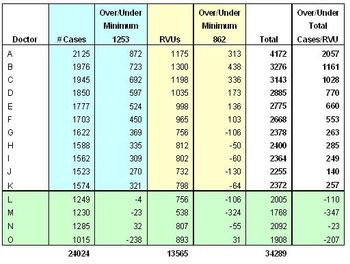
The first article in this series discussed why productivity-based compensation is controversial based on the various production levels in the group: the racehorses, plowhorses, and plodders. Once productivity-based compensation has passed the conceptual stage, the real work begins. And this phase, due to its potential complexity and the reality of potential salary adjustments, often represents the point at which the wheels fall off.

In response to a dramatic increase in the volume and cost of diagnostic imaging and other ancillary services furnished to Medicare patients in referring physicians’ offices, the Medicare Patient Advisory Commission is considering ways to rein in both.

A dramatic shift in R&D toward patient safety has taken place in the CT industry, a shift most clearly seen in efforts to reduce patient radiation dose. Iterative reconstruction algorithms are a prominent fixture at the ISCT meeting this year, as they and their future development are increasingly seen as providing the means to cut dose, while maintaining or even boosting image quality.