







Seeking to drive down patient radiation dose, Siemens Healthcare unveiled a new technology platform for its CT scanners, one that not only cuts dose but speeds the exam and promotes more efficient patient handling
Minnesota is in the vanguard as far as implementing clinical decision support, a tool that tamps down overutilization and reduces the incidence of patients receiving inappropriate diagnostic imaging tests. Minnesota is launching a statewide initiative to adopt the tool; others states are also considering its use.
Seeking to drive down patient radiation dose, Siemens Healthcare unveiled a new technology platform for its CT scanners, one that not only cuts dose but speeds the exam and promotes more efficient patient handling
Low-dose CT works just as well in the detection of acute appendicitis as standard dose. In an interview with Diagnostic Imaging Dr. So Yeon Kim explains the image quality of low-dose CT and the possibility of low-dose CT replacing standard dose in acute appendicitis patients.
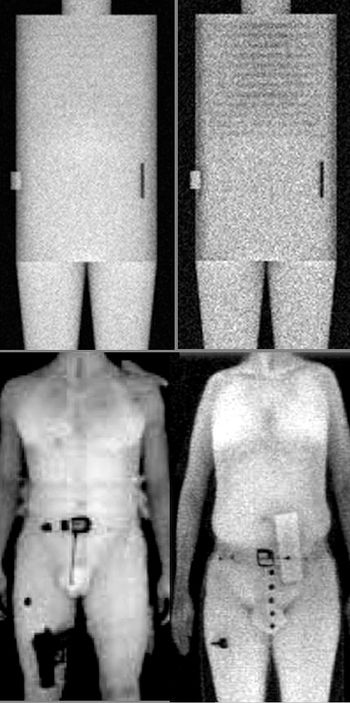
A phantom study suggests whole-body x-ray scanners are not effective. Backscatter scanners unlikely to detect substantial explosive amounts on the body.
The current generation of trainees in radiology and other medical specialties likely prefer texting to direct communication, but are we missing something in these electronic messages? I believe so.
Leaders in our practice started looking critically at our operations. We wanted to find out how well our billing and administrative operations function. Radiology profitability, as with most physician practices and businesses, is as much about keeping your overhead down as it is about increasing your income. I’ve learned that as long as revenue comes in and physicians’ paychecks are as big as-or bigger than-last year, most partners believe that all is well.
Radisphere’s best opportunities, according to Clayton T. Larsen, Radisphere senior vice president of client and network development, are community hospitals with 50 to 400 beds, particularly ones being served by poorly run radiology groups.
Teleradiology provider Radisphere is targeting community hospitals unhappy with small radiology group practices.
Vendors have tried to walk a thin line between providing equipment and prescribing its use. Automated protocols and image processing have been enhanced to make imaging products easier to use and the images they deliver more consistent from one user to another. But they have stopped short of mandating technologies that otherwise impact the practice of medicine. Now the FDA wants equipment makers to expand their role.
The National Cancer Institute released initial results from a large-scale clinical trial showing lung cancer screening with low-dose CT reduced mortality by 20% when compared to standard chest x-rays.
Coronary CT angiography came of age in the last decade. This occurred because CT technology moved into the 16- and 64- detector era.
I have an elderly, demented aunt in California for whom I am the responsible decision maker. Up until a few years ago, Aunt Doris was an intelligent, powerful, and forceful woman.
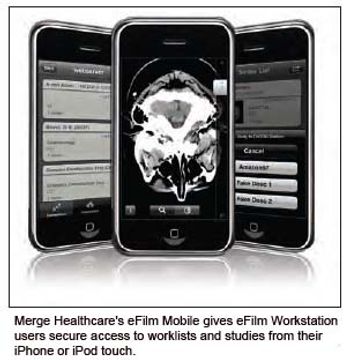
The bread and butter modalities of radiology, radiography and ultrasound, will be among the standouts of RSNA 2010.
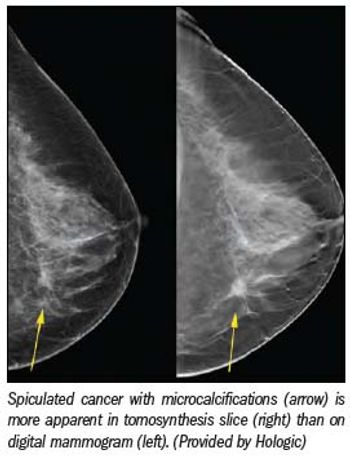
Breast tomosynthesis in the U.S. may finally be at hand. In September the FDA's Radiological Devices Panel unanimously agreed that Hologic's digital mammography tomosynthesis system, Selenia Dimensions, is effective and safe.
“I hope my doctor can figure out why I’ve been having so much difficulty swallowing of late,” said the patient as I finished his upper GI study. During the procedure I clearly saw a large mass invading the lumen of Mr. Jones’ esophagus but I kept this knowledge to myself as I made small talk with him before heading back to the reading room.
Radiology groups often describe themselves as being lifestyle-driven or financially driven. This distinction is helpful in describing a group’s philosophy, and in terms of workflow, these approaches can coexist.
California radiologists will be required to incorporate radiation dose levels in their reports under a measure signed into law Sept. 30 by Governor Arnold Schwarzenegger.
It’s all too easy to reduce medicine to facts, practices to technology. Patients need to be consulted when it comes to making decisions involving the use of CT, according to a recent emergency room survey, even when time is in short supply and the answers seem obvious.
Healthcare reform is game changer but nobody can yet fully articulate the impact of the new rules. How do you plan for the future when there are so many unknowns? This is the second article in a series that examines how healthcare reform is likely to affect radiology practices and how they can prepare for drastic changes to come.
Researchers in the radiation oncology department at UCLA’s Jonsson Comprehensive Cancer Center have received a $14 million grant to develop countermeasures that will help treat damage caused by radiological or nuclear threats such as a dirty bomb attack.
Globally, four billion people have no access to imaging services. Several U.S. organizations are part of an effort to share knowledge and resources to bring the benefits of imaging to medical systems in developing nations.
When times get tight, we start to hear complaints about overhead costs and nonphysician staff costs. That’s natural. But don’t let folks jump to conclusions. Just because you don’t know or understand a process doesn’t mean it’s superfluous. When I hear our radiologists mumble “what do all those people do?” I tell them it is time for them to find out. But don’t stick all the work on one person. Use the perceived “crisis” or gripe-fest to educate the staff on processes in the back office.
Musician Sheryl Crow teamed up with the Pink Lotus Breast Center to create the Sheryl Crow Imaging Center, a state-of-the-art breast imaging center based in Los Angeles featuring the latest advancements in digital screening and diagnostic imaging technologies.
“Meaningful use” is on everyone’s mind and sure to be a predominant topic for years to come.
In my last report (Capturing all your money matters. Here’s why) I explained why it matters to capture as much revenue as possible. Let’s recap some of the major reasons for doing this.
Launch of the new fourth-generation network from cellular wireless companies will enable radiologists to upload and download images more than 10 times faster than they have been able to in the past. While wireless mobile applications for imaging are still a distinct minority, the faster speeds could open the door for preliminary reads or image demonstrations on smartphones and iPads.