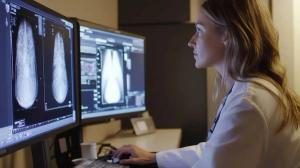

Study shows patients are positioned too low, negatively impacting radiation dose and image noise in chest CT.
Study shows patients are positioned too low, negatively impacting radiation dose and image noise in chest CT.

With big data comes big responsibility, but radiologists can benefit from the continuing big data trend.

Use of pediatric dose-reduction protocols and shielding for CTs vary among hospitals.
Tomosynthesis provides better visualization of architectural distortion than mammography.
Study tackles why women with most treatable form of breast cancer pursue most aggressive prophylactic measures; MRI false-positives have no effect.

Many CTs for suspected appendicitis among children may be avoided if radiologists use a diagnostic algorithm.

Q and A: Hologic may be getting competition as Siemens seeks premarket approval from the FDA for their breast tomosynthesis option in the U.S.
Combining MRI and mammography in an organized breast screening program for high-risk women is effective.

There can be many benefits to having all relevant information in one place, but some argue that radiologists shouldn't have a narrow focus.

Technology has come a long way in imaging.

Fujifulm’s Aspire Cristalle digital mammography solution received FDA clearance yesterday and includes features promoting patient comfort and image quality.
[VIDEO] Merging health records and PACS can improve radiologists’ workflow. Cree M. Gaskin, MD, discusses the benefits and challenges of a new system.
Screening with tomosynthesis in conjunction with digital mammography lowers recall rates and increases cancer detection.
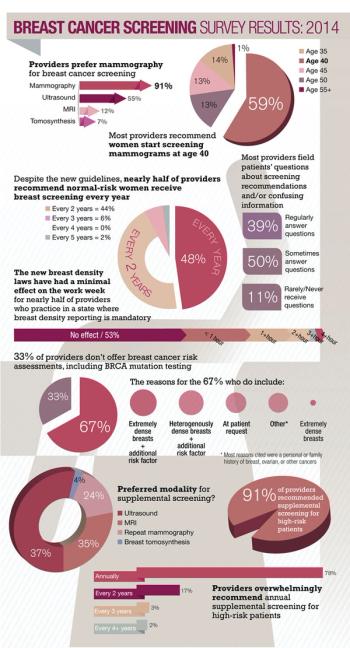
What’s the preferred breast cancer screening modality? When should patients begin screening mammograms? Are guidelines being considered? We compiled the data.
When mammograms are read by radiologists who are familiar with the patients’ risk factors, there are fewer missed diagnosis and false positives.

And for the next trick...
Women aged 50 to 69 who underwent mammography screening had a reduced death rate compared to women who did not have mammography screening.
Lower recall rates, more cancer detection were seen with 3D digital breast tomosynthesis, compared with 2D digital mammography.
The controversy of covering low-dose CT for lung cancer screening continues, as groups argue lives saved versus dollars spent.
Low-dose CT screening for lung cancer does not result in diminished health quality of life or long term anxiety, study says.
Use of digital breast tomosynthesis varies across the country and among practices, but is most often used clinically.
Short but intensive training was effective in training radiology staff on dose reduction.
Magnetic resonance imaging may be a promising way to detect lower levels of iron in the brain, helping determine which children have ADHD.

It can be difficult to decipher who has final say in radiology reports. Part 1 of 2.
The FDA has given Bayer’s Gadavist approval for use with MRI of the breast to evaluate malignant breast disease.

The radiology core exam has changed, find out here what’s different and how residents can prepare.
Imaging shows signs of brain abnormalities among babies born between 32 and 37 weeks’ gestation.
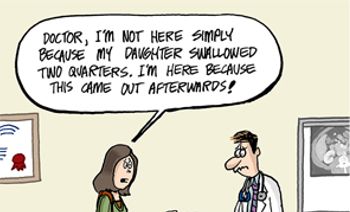
Radiologists say they've seen it all, but have they?
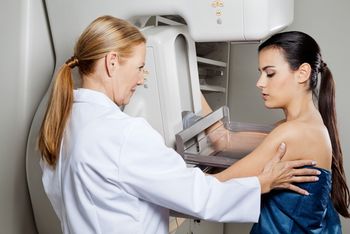
Tomosynthesis, photon counting and photoacoustic imaging are just a few of the growing options for breast imaging technology.
Timing of DTI is not restricted by the menstrual cycle, but is sensitive to menopause and milk in lactating women.