Philips-Disney Collaboration Targets Pediatric MRI Anxiety
A randomized controlled trial found that combining Disney characters with soothing ambient elements for pediatric MRI reduced anxiety levels by 43 percent in children under 10 years of age.
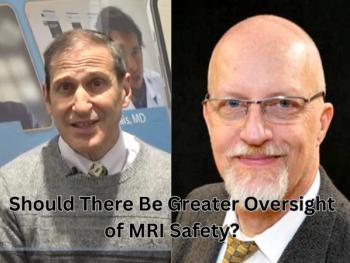
Pediatric MRI presents a well-documented challenge. Long scan times, loud environments, and unfamiliar surroundings contribute to significant anxiety in young patients. As Atul Gupta, MD, pointed out in a recent interview with Diagnostic Imaging, the numbers are striking.
"Data shows that two out of three kids — 66 percent — have anxiety during an MRI. It doesn't have to be that way,” said Dr. Gupta, the chief medical officer for diagnosis and treatment at Philips.
Motion from anxious patients degrades image quality, forces repeated sequences and extends already lengthy MRI scan times. These inefficiencies compound the growing global backlog in MRI demand. As Dr. Gupta pointed out, Philips has provided solutions to help address these issues through the use of AI-driven acquisition tools, such as Smart Speed Precise, to reduce scan times as well as the Philips Ambient Experience, a system using calibrated lighting, projection, and sound to promote patient relaxation during MRI scanning.
Now Philips has collaborated with the Walt Disney Company to integrate Disney characters into the Philips Ambient Experience platform across Philips MRI systems in 87 countries.
The clinical rationale is supported by a 2025 randomized controlled multicenter study published in
Dr. Gupta emphasized that the design parameters governing the Disney content are clinically driven. For example, Dr. Gupta said the Ambient Experience employs a center screen rule in keeping the Disney content in the center of the child’s visual field.
“If you have rapid eye movements, the ocular movements can actually cause artifacts on an MR of the brain, for instance, where the child starts moving their head, that will cause artifacts. We don't want stuff to go on the periphery. We want a very slow-paced scan,” noted Dr. Gupta.
Other design elements of the Philips and Disney collaboration for pediatric MRI are focused on reducing potential anxiety, according to Dr. Gupta.
“We want the imagery to sync with the sound and the light that we're projecting in the room to lower the child's breathing rate and lower the child's heart rate, which will lower that anxiety, and again the overstimulation that we don't want. There are all of these rules that we've put into play,” explained Dr. Gupta.
The broader workflow implications are meaningful for both radiologists and technologists. Fewer interruptions mean fewer repeated sequences, less time comforting or repositioning patients mid-scan, and improved first-pass image quality.
"If you can reduce that pediatric anxiety, you get a better quality exam. You don't have the motion artifacts. So, radiologists are happy, and we're lowering that scan time," emphasized Dr. Gupta.
Reference
- van der Vleuten-Chraibi S, Nauts S, Barańska D, et al. Magnetic resonance imaging related anxiety and workflow: impact of a child-friendly audio-visual intervention. Pediatr Radiol. 2025;55(9):1934-1942.
Related Content