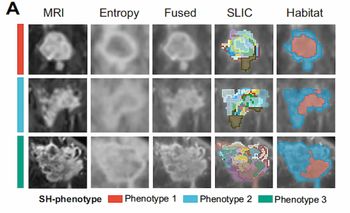
In multivariable external testing, tumor structure habitat phenotypes from pre-treatment MRI revealed more than a doubling of recurrence risk for women with stage 2 and stage 3 breast cancer.
Findings from a large multicenter study suggest 64-slice CT angiography is better suited than other cardiac diagnostic tests for detecting clinically relevant coronary artery plaques in patients with diabetes.
Findings from a large multicenter study suggest 64-slice CT angiography is better suited than other cardiac diagnostic tests for detecting clinically relevant coronary artery plaques in patients with diabetes.
Dr. Fay Y. Lin, an associate professor of medicine at Cornell University, and colleagues prospectively evaluated a cohort of 3926 patients with symptomatic cardiovascular disease, Lin determined that 727 had diabetes. All patients underwent coronary 64-slice CTA between 2005 and 2007. Researchers found that patients with diabetes faced twice the risk of dying from a cardiac-related problem within two years of diagnosis as nondiabetic patients. CTA more accurately characterized plaque burden than alternative modalities for patients with low calcium score or normal stress testing results. Lin reported the findings at the 2009 Society of Cardiovascular Computed Tomography meeting.
almost 17 years ago
Critical results still go unnoticed on patient EMRalmost 17 years ago
University of Virginia opens center for ablation researchalmost 17 years ago
Contrast media reactions rarely happen, study findsalmost 17 years ago
Women who skip mammo face higher risk of deathalmost 17 years ago
Rads urge cautious CT use for swine flu workupalmost 17 years ago
Berger urges imagers to be stewards of radiologyalmost 17 years ago
Disaster survivors show early signs of traumatic stressalmost 17 years ago
fMRI lights up gap between consciousness and cognitionalmost 17 years ago
A reply from Dr. Leonard Berlinalmost 17 years ago
Defending mammography in the face of continued attacks