










No difference was seen between women who were screened yearly and those who did not undergo annual exams.
No difference was seen between women who were screened yearly and those who did not undergo annual exams.

Classification leads to fewer missed breast cancers.

Here's what to expect this week on Diagnostic Imaging.
Patients indicated breast imaging radiologists expressed more empathy over the diagnosis and had more understanding of their scans than other providers.
Although these tests are controversial, they are highly effective in identifying lumps that lead to breast cancer diagnoses.

After a decade, roughly 75 percent of women with dense breasts seen in one department now undergo screening whole-breast ultrasound as a supplemental imaging service.
Algorithms outperformed providers in accurate, quick detection and classification.

Experts at ECR 2021 offer their top three tips for a variety of breast imaging techniques.
For women with dense breasts, automated breast ultrasound offers advantages over supplemental screening with hand-held ultrasound.

The approach, based on ACR guidance, is intended to promote vaccine use while reducing patient anxiety and unnecessary imaging.

Here's what to expect this week on Diagnostic Imaging.

Female breast cancer diagnosis is now the most common cancer diagnosis globally, largely affecting women in transitioning countries.
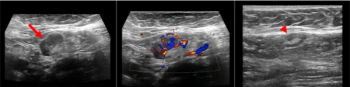
With more axillary adenopathies likely to present on breast imaging, Society of Breast Imaging experts offer guidance for best management during the pandemic.
Here's what to expect this week on Diagnostic Imaging.
COVID-19 Vaccine Adenopathies Mimic Breast Malignancies; Appendicitis, CT Exposure and Increased Cancer Risk; and MRI AI Tool for Prostate Cancer Recurrence Prediction
Swollen lymph nodes visualized on mammography and ultrasound appear days post-vaccination and could be mistaken for malignancies.
Seno’s Imagio® breast imaging system can help providers distinguish, in real-time, between benign and malignant breast lesions.
The pandemic’s impact on sonographers was largely a boomerang effect, but some struggles remain.
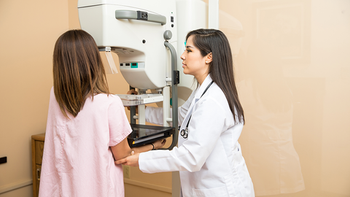
While the pandemic raged, work continued to advance the development of AI tools with breast imaging services.
Hologic’s Jennifer Meade, division president of breast and skeletal care, discusses the focus for breast imaging in the near future and some latest technologies.

Women who experience food or housing insecurities are more likely to take longer between imaging and follow-up, putting them at greater risk for undiagnosed breast cancer.
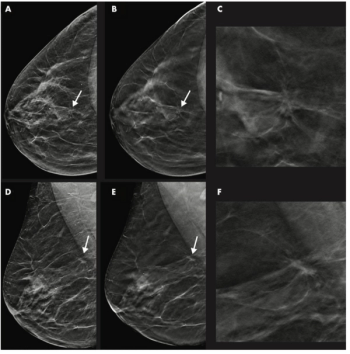
Not only did this combination improve breast cancer detection, but it could also catch more potentially invasive cancers earlier.
Breast Cancer Screening in Indian & Pakistani Women; Fluciclovine PET for Prostate Cancer Imaging; Cardiac Ultrasound & COVID-19; and Improving Mammography Patient Experience

Delays in the diagnosis and treatment of breast cancer have led to the creation of multidisciplinary recommendations for breast cancer care during the COVID-19 pandemic.
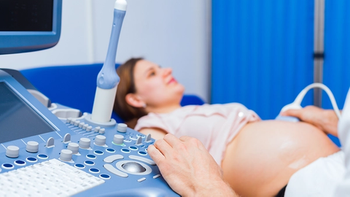
Late pregnancy scans cannot reliably predict one of the most common delivery complications.