










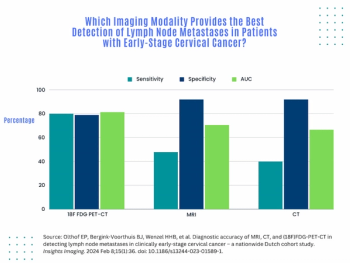
For the detection of nodal metastases in patients with early-stage cervical cancer, 18F FDG PET-CT offered a sensitivity rate that was double that of CT and 32 percent higher than MRI, according to newly published research.
For the detection of nodal metastases in patients with early-stage cervical cancer, 18F FDG PET-CT offered a sensitivity rate that was double that of CT and 32 percent higher than MRI, according to newly published research.
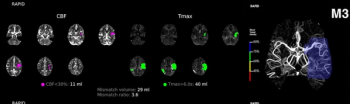
The use of multiple artificial intelligence (AI) modalities to assess blood vessel density reduction and computed tomography perfusion (CTP) mismatch values facilitated a 93.3 percent detection rate for medium vessel occlusions, according to research presented recently at the International Stroke Conference.
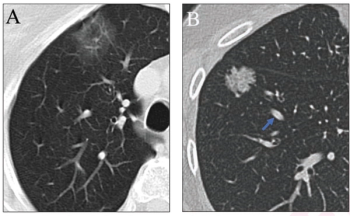
In a computed tomography (CT) study assessing over 450 patients who had lung adenocarcinoma resection, researchers noted zero recurrence at five years and 97.7 percent recurrence-free survival at seven years for patients with resected pure ground glass nodules.
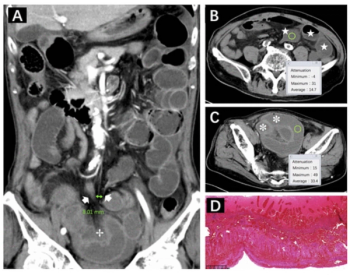
Demonstrating an 81 percent AUC, 99 percent specificity and a 98 percent positive predictive value, increased attenuation of intestinal contents was one of four CT findings deemed to be an independent predictive factor for bowel necrosis in patients with closed-loop small bowel obstruction.
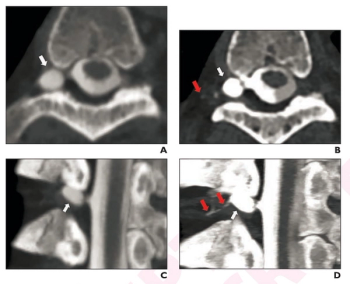
In a comparative study of energy-integrating detector CT myelography versus photon-counting detector CT (PCD-CT) myelography for the detection of cerebrospinal fluid-venous fistulas (CVFs) in cases of spontaneous intracranial hypotension, PCD-CT myelography demonstrated 10 to 19 percent higher sensitivity rates with reviewing radiologists.
Catch up on the top radiology content of the past week.
In a recent interview, Markus Scherer, M.D., discussed emerging research, presented at the American College of Cardiology Cardiovascular Summit, which showed that coronary computed tomography angiography (CTA) was associated with a significantly higher likelihood of revascularization in comparison to other modalities or direct referral for invasive coronary angiography.
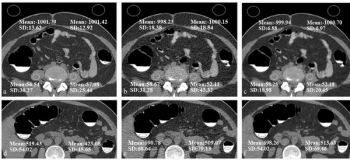
Researchers found the use of deep learning reconstruction for computed tomography colonography (CTC) led to 25 percent higher subjective image quality scoring than iterative image reconstruction at a substantially reduced rate of radiation dosing.
Catch up on the most-well viewed radiology content in January 2024.
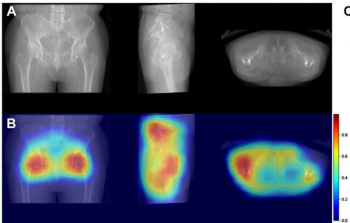
Employing reconstructed radiographs from 3D hip CT scans, a deep learning model demonstrated a higher concordance index (C index) and higher two- and three-year AUCs than multiple imaging models and three clinical models for predicting subsequent fracture risk in patients with hip fractures.
Catch up on the top radiology content of the past week.

Catch up on the top AI-related news and research in radiology over the past month.
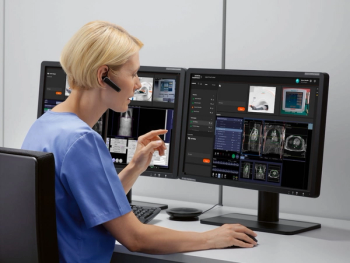
The syngo Virtual Cockpit platform reportedly enables remote access and image acquisition for CT, MRI and positron emission tomography (PET), and facilitates clinician collaboration across multiple sites.
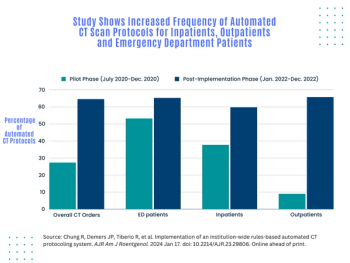
In a nearly two-year study of over 300,000 CT exams, researchers noted a 56.8 percent increase in the frequency of automated CT protocols for outpatient CT examinations.
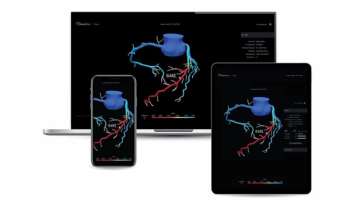
The new Category I CPT code reportedly facilitates a nearly 7 percent increase in reimbursement for use of the CT-based fractional flow reserve assessment of coronary blood flow.
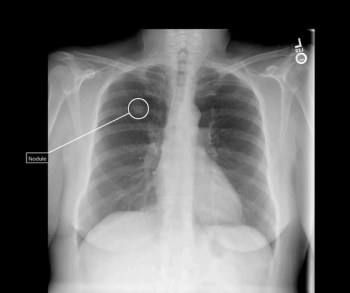
In a recently issued statement from multiple radiology societies including the RSNA and ACR, researchers offer practical advice for evaluating artificial intelligence (AI) tools, implementing AI into current workflows and monitoring of the technology to help ensure optimal benefit and effectiveness.
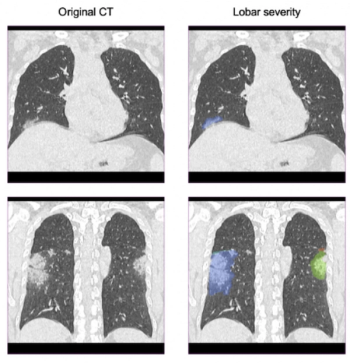
Reportedly offering improved delineation of pulmonary structures and greater accuracy with computed tomography (CT) values of pulmonary tissue, the artificial intelligence (AI)-powered LungQ 3.0.0. may facilitate enhanced precision and efficiency with interventional procedures such as lung volume reduction and ablation procedures.
Catch up on the top radiology content of the past week.
For patients with suspected interstitial lung disease, the digital biomarker solution Fibresolve offers machine learning capability of diagnosing idiopathic pulmonary fibrosis (IPF) based on assessment of lung computed tomography (CT) scans.

Utilized for neurological procedures including biopsies, catheter placement and electrode introduction, the SmartFrame OR Stereotactic System can be combined with preoperative MRI or CT to ensure optimal placement of devices and instruments.
Catch up on the top radiology content of the past week.
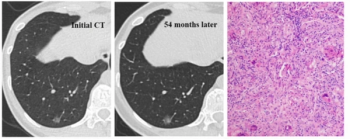
Patients with benign pulmonary absorbable subsolid nodules (AB-SSNs) have a greater frequency of nodules in comparison to those with non-absorbable benign subsolid nodules (NB-SSNs) and patients with malignant subsolid nodules (M-SSNs), according to a recent study of follow-up non-contrast CT exams in over 400 patients.
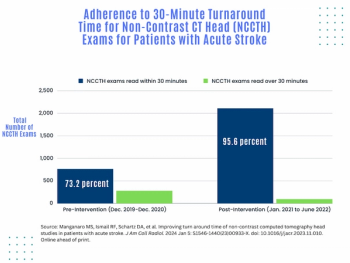
Modifications to the radiology workflow, including the use of a structured report template, improved adherence for 30-minute turnaround times for acute stroke head CT results from 73.2 percent to 95.6 percent, accordingly to new research.
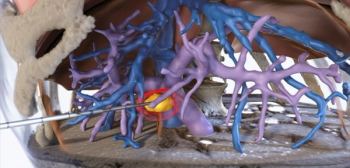
The BioTraceIO software reportedly facilitates visualization of liver tumor ablation procedures based on real-time ultrasound imaging and provides superior post-op estimates of ablation zone volume in comparison to computed tomography.
Catch up on the top radiology content of the past week.