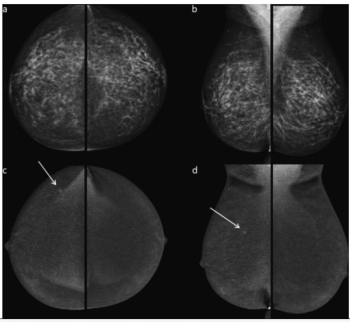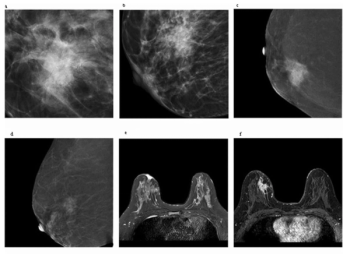
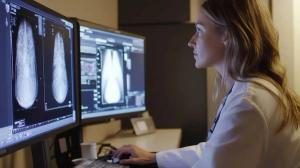
In a 10-year study involving over 5,400 women with nearly 85 percent having dense breasts, contrast-enhanced mammography (CEM) demonstrated a 95.9 percent sensitivity rate for breast cancer.

In a 10-year study involving over 5,400 women with nearly 85 percent having dense breasts, contrast-enhanced mammography (CEM) demonstrated a 95.9 percent sensitivity rate for breast cancer.

Catch up on the most-well viewed radiology content in October 2024.

Catch up on the top radiology content of the past week.

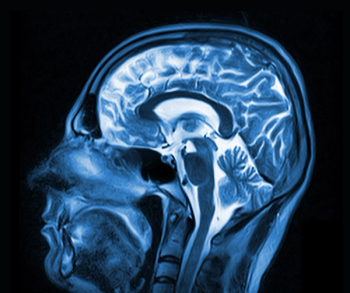
New research revealed no significant difference between gadolinium-free MRI and GBCA-enhanced MRI in preoperative predictive accuracy for the grading of diffuse gliomas in adults.

Catch up on the top AI-related news and research in radiology over the past month.

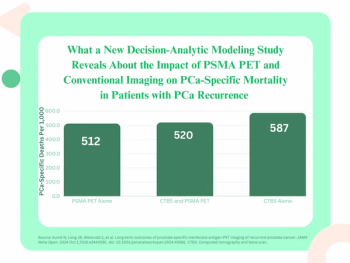
For patients with biochemical recurrence of prostate cancer, PSMA PET imaging may facilitate a 12.8 percent lower incidence of prostate cancer mortality in contrast to the combination of CT and bone scan, according to long-term outcome estimates from a new decision-analytic modeling study.

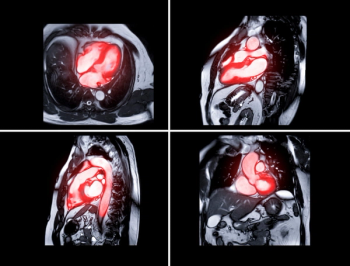
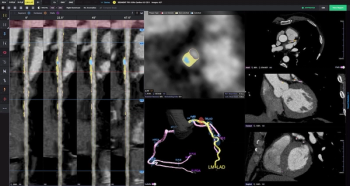
The updated software reportedly provides access to more than 200 enhanced features including optimized hanging protocols with a cardiac MRI viewer and perfusion quantification analysis.

A model emphasizing time-dependent diffusion MRI was 15 percent more effective than apparent diffusion coefficient (ADC) measurements at predicting pathologic complete response to neoadjuvant chemotherapy for women with breast cancer, according to new research.

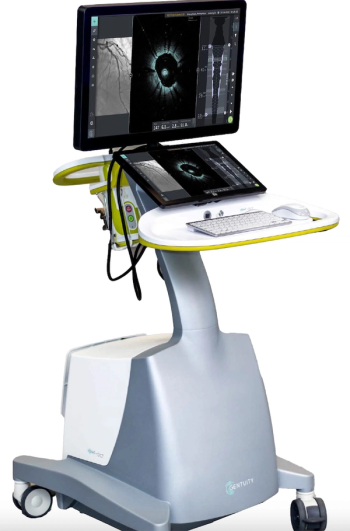
The Gentuity HF-OCT Imaging System, which includes the 1.8 F Vis-Rx Micro-Imaging Catheter, is reportedly the first intravascular imaging system to garner a specific indication for pre- and post-intervention assessments of coronary vessels.

The Ezra Blueprint scan reportedly includes quantitative brain measurements, coronary calcium scoring (CAC) and a full-body MRI that provides screening for over 500 conditions.

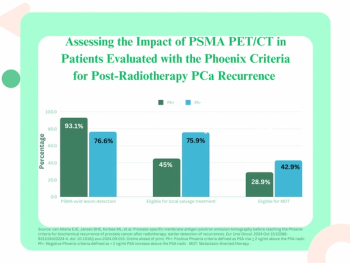
Earlier detection of PSMA-avid lesions in post-radiotherapy patients with increases in PSA levels < 2 ng/ml above nadir were reportedly associated with a significantly lower incidence of distant metastases and lower overall mortality rates.

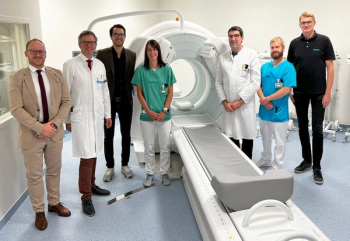
Designed for theranostic imaging applications, the AnyScan Trio SPECT/CT TheraMax scanner was recently unveiled at the annual meeting of the European Association of Nuclear Medicine (EANM).

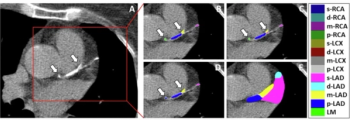
For segment-level coronary artery calcium (CAC) scoring, a deep learning model had an accuracy rate of 73 percent for assigning calcifications to coronary artery segments and achieved a micro-average specificity of 97.8 percent.

There can be a thin line between providing extra effort in a team setting and overextending oneself to compensate for the shortcomings of others.

Offering standardized assessment of amyloid plaque and insights on tau protein tangles, the newly clearly FDA features of Centiloid scoring and tau PET quantification with syngo.PET Cortical Analysis software may facilitate diagnosis of Alzheimer’s disease.

Catch up on the top radiology content of the past week.

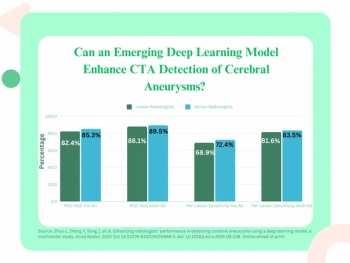
Adjunctive use of deep learning reportedly led to a 37 percent reduction of interpretation time for cerebral aneurysm assessment on computed tomography angiography (CTA) and greater than a 90 percent reduction in post-processing time.

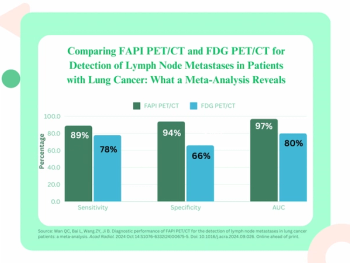
Examining six comparative studies within a new meta-analysis, researchers found that FAPI PET/CT offered 11 percent higher pooled sensitivity and 28 percent higher pooled specificity than FDG PET/CT for diagnosing lymph node metastases in patients with lung cancer.

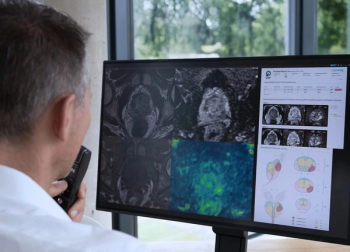
When employing a PI-RADS > 4 cutoff, researchers found that the mdprostate software provided an 85.5 percent sensitivity rate for diagnosing clinically significant prostate cancer on mpMRI.

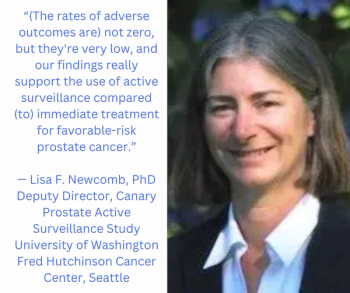
In a recent interview, Lisa F. Newcomb, Ph.D., discussed the merits of active surveillance for low-risk prostate cancer (PCa) and key findings from multicenter research involving over 2,100 men with localized PCa.

Leveraging AI technology, the AiMIFY software reportedly facilitates double the contrast enhancement in comparison to gadolinium-based contrast agents (GBCAs) for brain MRI.

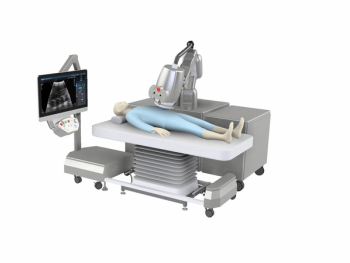
The Sonire Therapeutics ultrasound system is currently being studied for the treatment of patients with unresectable pancreatic cancer refractory or intolerant to first-line chemotherapy.

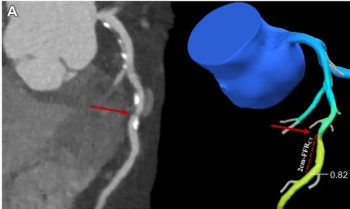
In nearly 5,300 patients with suspected coronary artery disease (CAD), adjunctive use of CT-based fractional flow reserve software significantly reduced the 90-day invasive coronary angiography (ICA) rate in comparison to unassisted use of coronary computed tomography angiography (CCTA).

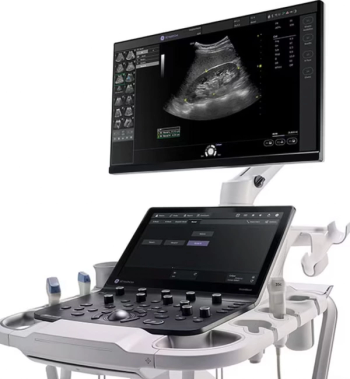
The new ultrasound platform reportedly offers a combination of enhanced imaging and AI-enabled tools to facilitate improved workflow efficiency.

Four Medicare administrative contractors (MACs) will provide coverage of AI-enabled coronary plaque analysis and quantitative coronary tomography assessment of coronary computed tomography angiography (CCTA) for Medicare beneficiaries starting in November 2024.

For women with breast-enhanced masses, Kaiser scoring (KS) demonstrated a 20 percent higher AUC than BI-RADS classification for contrast-enhanced mammography (CEM) and was comparable to KS for breast MRI.

“I hate to say this but …” prefacing criticisms with tired disclaimers is an all-too common, albeit necessary, practice in radiology.

Catch up on the top radiology content of the past week.

New research suggests that reviewing mammography images in order of ascending volumetric breast density as opposed to random reading of exams demonstrated reduced reading time and less fixation time on malignant lesions.

Therapixel’s MammoScreen suite has received 510(k) FDA clearances for a breast density assessment feature and updated software that includes automated pre-reporting, which reportedly expedites reporting of mammography findings.