
Elad Walach, Aidoc chief executive officer, discusses recent research into global CT imaging volume fluctuations and how providers should view that data.
Elad Walach, Aidoc chief executive officer, discusses recent research into global CT imaging volume fluctuations and how providers should view that data.
Operational steps are important, but practices who pay attention to broader strategies with patients, insurance, and payment models could see a stronger bounce back.
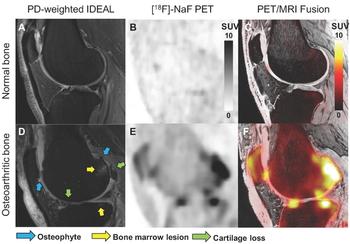
Using PET/MRI 18F NaF offers new functional measure for assessing degeneration of knee joints.

Thoracic vertebrae captured in scans allows for bone mineral density measurements that can pinpoint the presence of osteoporosis.
Providers from Radiology Partners share how the practice has confronted COVID-19 and the lessons learned for thriving in this environment.
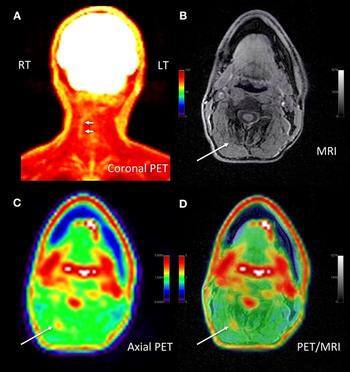
18F-FDG PET/MRI can identify pain generator locations, leading to changes in pain management.
Academic departments share their approaches to COVID-19 recovery.

Residency programs must re-cast the screening and interviewing process in order to be successful during the pandemic.

Paying attention to your cycles of energy and enthusiasm can lead to better work productivity and outcomes.

From February to April 2020, outpatient imaging in rural areas fell 66 percent.

Artificial intelligence tool designed to improve radiologist cancer detection performance.

Paying attention to scanner strength, IV contrast, and body parts imaged can contribute to reducing anesthesia use.
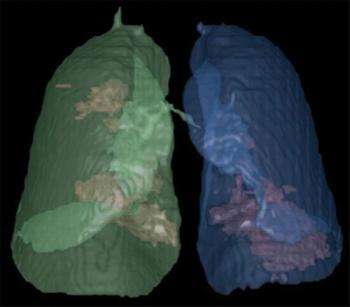
Scans reveal differences in lesion locations, mucoid impaction, and pleural effusion.
Diagnostic Imaging's Weekly Scan; July 10, 2020
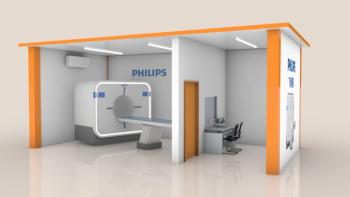
Philips thinks outside-the-box by turning shipping containers into individual CT and X-ray scan rooms.
Case study results show patient has brain connectivity similar to healthy individuals, pointing to positive prognosis possibilities.
An existing program set one London hospital up for success in managing images remotely during COVID-19.

Incorporating this imaging catches 11 percent more cancers, potentially affecting surgery plans and outcomes.

Annual MRI screening – with or without mammography – can prevent at least 50 percent of early deaths.

The RSNA Research and Education Foundation awards 93 grants from 47 institutions.
One expert makes the case that the negative hype around artificial intelligence is not warranted and the radiologist’s role is secure.
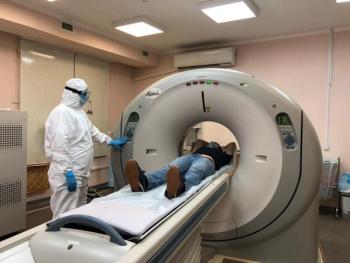
A network of nearly 50 CT facilities and the Moscow government reveal how their collaboration is working to promptly diagnose patients with COVID-19.
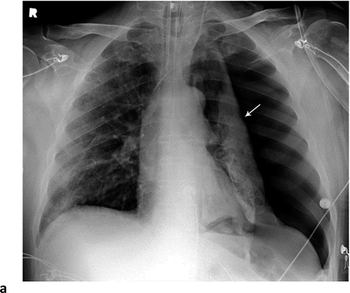
Patients positive for the virus are more likely to experience barotrauma, putting them at risk for longer hospital stays and mortality.
Rapid ASPECTS receives clearance as first neuroimaging analysis device in computer-aided diagnostic category.
ACR and RSNA leaders request the FDA slow its momentum with AI tools that work without radiologist oversight.
Envisioning the radiology editor – what could that look like?
Partnering healthcare providers look for – and value – six main things from radiology.
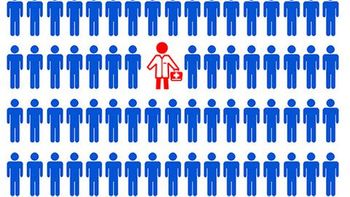
The Association of American Medical Colleges predicts the specialist shortfall could swell to nearly 42,000 by 2033.
Breast cancers identified between patient screenings are more aggressive and lethal.

Tampa Bay-based practice launches text and online registration process for maximum social distancing.