

Onvision is designed to increase accuracy of needle placement during peripheral nerve blocks.
Onvision is designed to increase accuracy of needle placement during peripheral nerve blocks.

Past RBMA President Christie James, American College of Radiology Commission on Economics Chair Greg Nicola, M.D., and Revenue Cycle Coding Strategies President Melody Mulaik discuss the radiology revenue cycle management challenges and solutions of the pandemic.

Drops in emergency department use and referrals for abdominal CTs have led to worsening prognoses for patients with abdominal pain.

Ultrasound is an effective follow-up strategy for masses pinpointed with DBT, potentially side-stepping the need for digital mammography and lower radiation exposure.
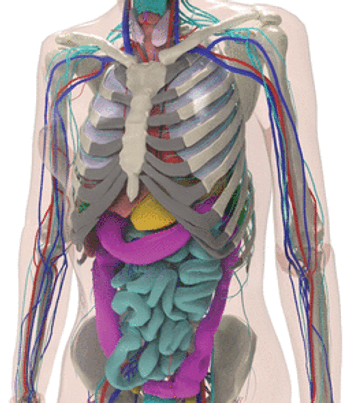
Virtual simulation models can help identify the best ways to use different modalities to improve patient care during the pandemic.
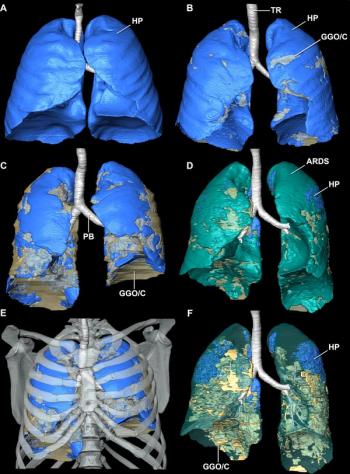
Radiologists have teamed up with evolutionary anatomy scientists, using methods that investigate bird and reptile lungs, to better visualize viral infection in people.
CT and heart attack prediction; lagging outpatient imaging volume recovery; equivalent thoracic MRI performance with COVID-19 pneumonia; and CT colonography during COVID-19

eConsults between primary care providers and radiologists can not only alter patient management, but they can also lower costs and reduce unnecessary imaging.

The company has captured 510(k) clearance for artificial intelligence-based software that facilitates brain and prostate image interpretations.
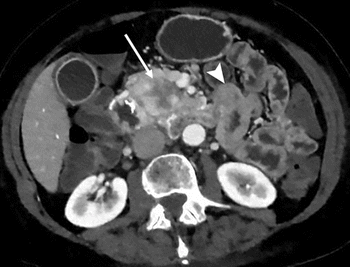
Both radiology residents and attending providers make more interpretive mistakes during evening and overnight hours.

Anticipating where hackers might strike and determining how to prevent attacks can be critical.

Across racial and gender groups, CT scans that measure coronary artery calcium can more accurately predict the 10-year risk for heart attack.
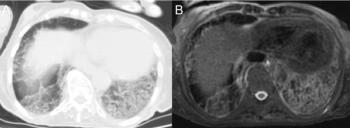
MRI offers high sensitivity and specificity, as well as positive and negative predictive value in detecting infection without the radiation.

Imaging volumes fell farther across most modalities in outpatient imaging centers and are taking longer to rebound.

Looking at the existing push for non-radiologists to interpret exams.
The University of Cincinnati launched a 10-week program that led the department back to roughly 100-percent pre-COVID-19 levels.

Nearly 90 percent of providers report experiencing disabling pain at work with 30 percent indicating the pain prevents regular exercise.

A recent study reveals referring providers do not always read requested second opinions.
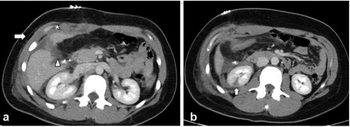
Severe intimate partner violence is five-fold higher this year than in the previous three – radiologists have the opportunity to proactively identify at-risk patients.
Abbreviated MRI; Low-Field Cardiac MRI; Contrast-Enhanced Breast Imaging; Obesity and Alzheimer's; and Neuroimaging and COVID-19
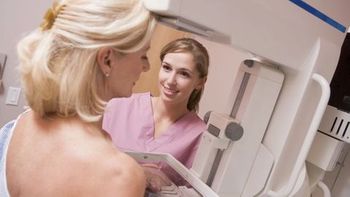
Implementing annual breast cancer screening a woman’s 40 can significantly reduce her mortality risk.
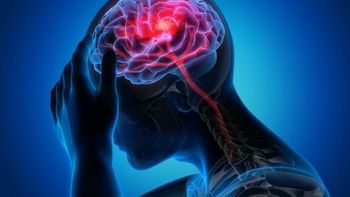
Images reveal hypertension can be significant risk factor for CSVD.

Knowing what causes screening delays and how to safely assess risks can streamline your MR imaging.

Abbreviated MRI protocols can detect and diagnose breast cancer as well as full-protocol MRI.

Referring physicians will have until after 2021 to adopt appropriate use criteria and clinical decision support.
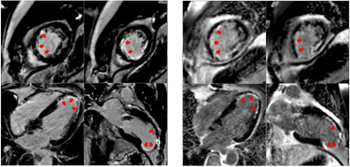
Performance of 0.55T MRI is comparable to 1.5T MRI in acquiring and interpreting late gadolinium enhancement in patients suspected of myocardial infarction, research shows.

Support for continued teleradiology after the pandemic is strong, but some concerns exist.
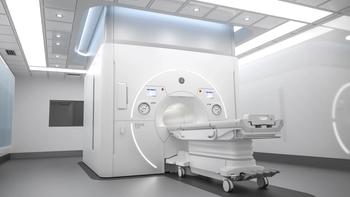
Products focus on Alzheimer’s disease, traumatic brain injury, and accelerating clinical translation.

From augmented reality to virtual reality to robotics to new procedural techniques – the future of interventional radiology is bright.
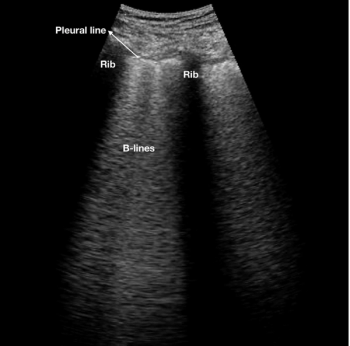
Lung ultrasound scans pinpoint lingering lung damage in patients who meet clinical parameters for hospital discharge, alerting doctors to patients who will need longer-term care.