
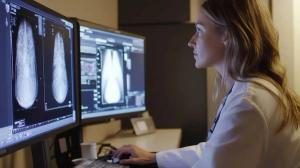

When a self-imposed expectation of productivity is a driving force.
When a self-imposed expectation of productivity is a driving force.

Re-authorize MDUFA without raising user fees to fund unrelated programs.

Here's what to expect this week on Diagnostic Imaging.

More culturally relevant screening strategies could improve preventive healthcare in these groups.

Industry experts advocate for radiologists to opt for relying on artificial intelligence – rather than non-physician providers – for help with workflow and cost reduction.
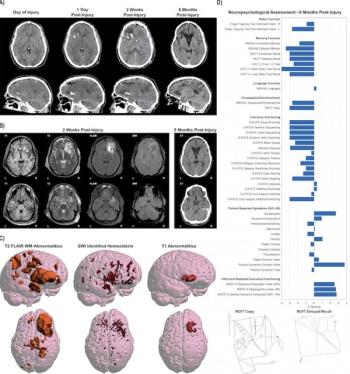
Worldwide effort will amass large datasets from institutions that can be used to identify long-term traumatic brain injury and augment therapies.

CMS pushes launch from January 2021 to July 2021.
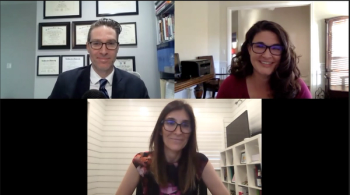
Ultrasound as the New Stethoscope; Pre-Operative MRI and Dense Breasts; Spectral CT and COVID-19; Corporatization in Radiology

Researchers from China recommend disinfecting the air, alongside, sanitizing surfaces, to reduce exposures and transmission.
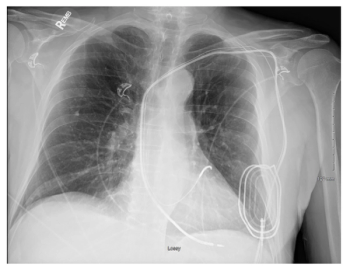
Study shows MRI exams can be safely performed with no adverse events in patients who have non-MR conditional devices, making the exams available for patients who frequently needs these studies the most.

Screening mammography begins to reduce breast cancer mortality at an age earlier than when most women begin screening.
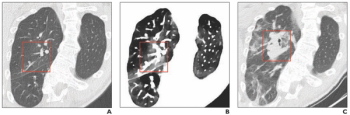
Spectral CT provides greater detail about the extent of ground-glass opacities than conventional CT scans.
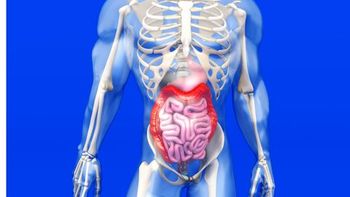
African American, as well as other racial and ethnic minority, patients likely have lower levels of CTC screening due to out-of-pocket costs.
Algorithm cleared to help radiologists analyze and segment prostate MRI.
MRI catches more malignant lesions in women with dense breasts who undergo digital breast tomosynthesis than those who have digital mammography alone.
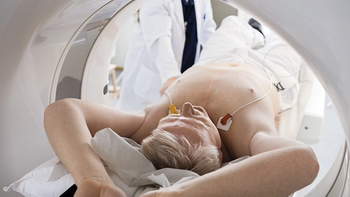
Training a neural network with images captured by dual-energy CT can produce high quality studies without the added dose or expense.
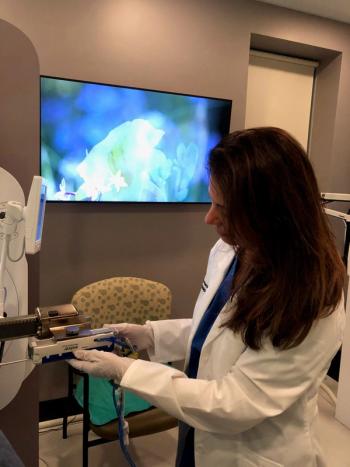
Serena Bright™ shortens time to biopsy results, a critical capability during the COVID-19 pandemic.
A pilot lecture series at one medical center is designed to provide residents with in-depth instruction in commonly used artificial intelligence algorithms.
Here's what is coming soon to Diagnostic Imaging.
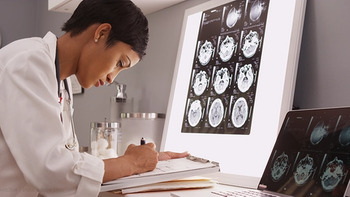
How many lives have you changed, one scan at a time?
Four challenges are preventing more institutions from implementing remote reading.
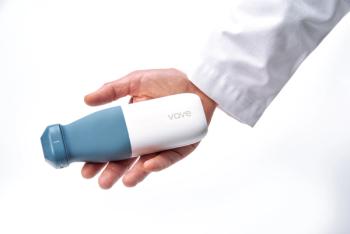
A partnership between one medical school and an ultrasound manufacturer is intended to re-design how students learn.
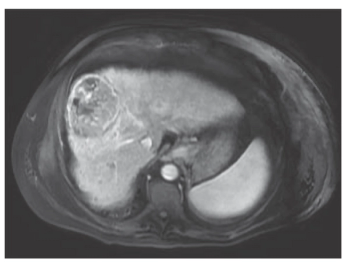
Mistakes highlight the need for more sub-specialty reads with MRI, particularly abdominal and pelvic scans.
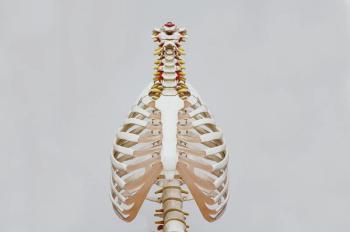
The strategy could be a less expensive alternative to CT when evaluating pulmonary fibrosis and pulmonary edema.
Opposition to AI in Mammography; Alzheimer's Disease and Vascular Dysfunction; Clear & Present Danger for The Match; Trends & Innovations in Breast Imaging
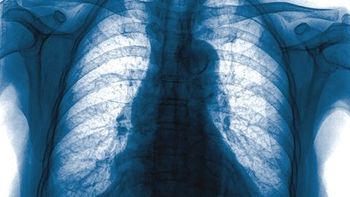
Cases drafted by radiology extenders saved attending radiologists nearly one hour a day.
In this podcast, Dr. Anupam Basu from Cook County Health in Chicago discusses the 30-pack-year threshold for lung cancer screening that overlooks at-risk African American smokers.
Delays in the diagnosis and treatment of breast cancer have led to the creation of multidisciplinary recommendations for breast cancer care during the COVID-19 pandemic.
More than three-quarters of women prefer a radiologist to be involved with reading their screening studies.
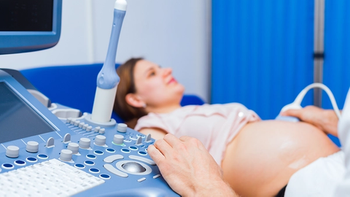
Late pregnancy scans cannot reliably predict one of the most common delivery complications.