
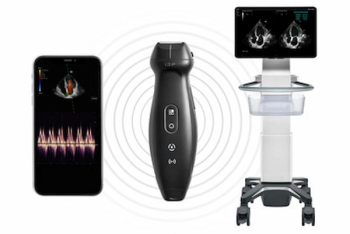
The TE Air is reportedly the first handheld ultrasound device to offer dual connectivity to mobile devices or touch-based ultrasound systems.
Senior Editor, Diagnostic Imaging
The TE Air is reportedly the first handheld ultrasound device to offer dual connectivity to mobile devices or touch-based ultrasound systems.
In a study of over 23,000 men who had PSA testing, researchers found that the adoption of pre-biopsy MRI resulted in a 21 percent decrease in negative biopsies and a 37 percent increase in the proportion of diagnosed Gleason score 7 to 10 prostate cancers.
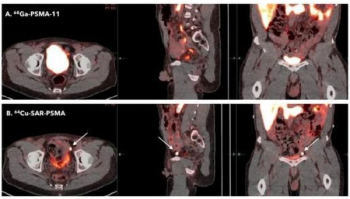
The PSMA PET agent 64Cu SAR-bisPSMA detected a higher number of prostate cancer lesions and had a significantly higher SUVmax and SUVmean than 68Ga PSMA-11 PET/CT, according to initial data from a prospective multisite study presented at the recent Society of Nuclear Medicine and Molecular Imaging (SNMMI) conference.
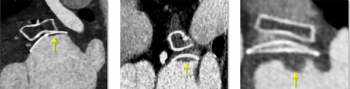
The presence of high-grade hypoattenuation thickening on follow-up computed tomography (CT) after left atrial appendage occlusion (LAAO) procedures for patients with atrial fibrillation was associated with a 4.6-fold risk for stroke, according to newly published research.
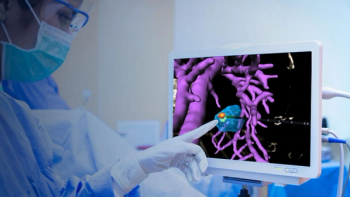
Through the use of artificial intelligence (AI) and imaging modalities such as ultrasound, CT, and MRI, the newly FDA-cleared VisAble.IO software reportedly enhances planning and real-time assessment for liver tumor ablation procedures.
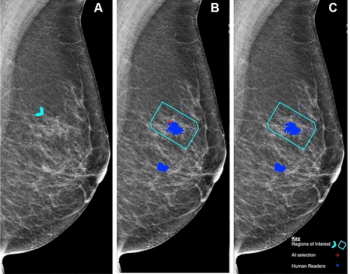
In separate test sets that included challenging mammography cases, researchers found that artificial intelligence (AI) demonstrated similar sensitivity and specificity for detecting breast cancer in comparison to assessments from over 500 clinicians.

In the third episode of a three-part podcast, Anand Narayan, M.D., Ph.D., and Amy Patel, M.D., discuss the challenges of expanded breast cancer screening amid a backdrop of radiologist shortages and ever-increasing volume on radiology worklists.
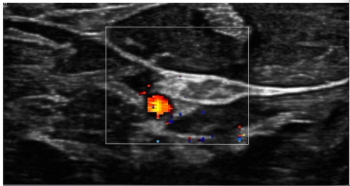
Offering a variety of enhanced features for image optimization and improved workflow efficiencies, the Sierra NMUS1 device reportedly includes the first software specifically designed for neuromuscular ultrasound applications.
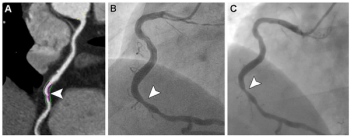
A high lipid core burden in non-revascularized plaque is associated with nearly a 13-fold higher risk of major adverse cardiovascular events (MACEs) such as cardiac death and myocardial infarction (MI), according to new research based on coronary computed tomography angiography (CCTA) findings.

Featuring sector and linear arrays, the FDA-cleared Vscan Air SL ultrasound device reportedly enables cardiac and vascular assessments at the point of care.
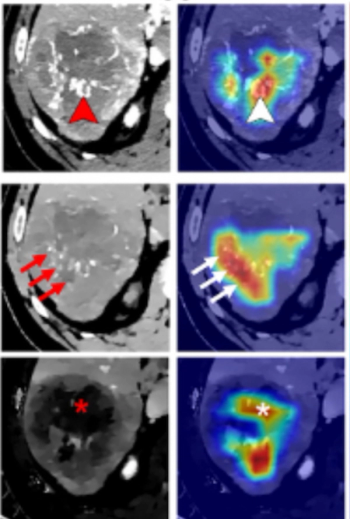
In comparison to clinical-radiologic assessment, a deep learning CT radiomics nomogram had a 10 percent higher AUC and a 27 percent higher specificity for predicting the macrotrabecular massive subtype of hepatocellular carcinoma in external data testing.
In the second episode of a three-part podcast, Anand Narayan, M.D., Ph.D., and Amy Patel, M.D., discuss recent studies published by the Journal of the American Medical Association (JAMA) that suggested moving to more of a risk-adapted model for mammography screening.
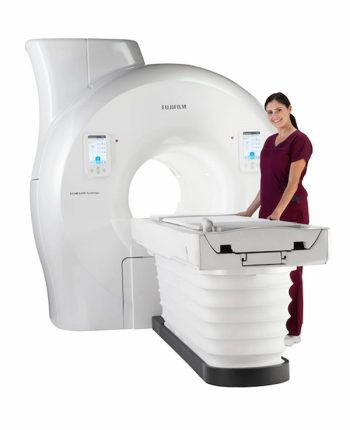
The Echelon Synergy MRI system reportedly uses deep learning technology to accelerate image acquisition and enhance image quality.
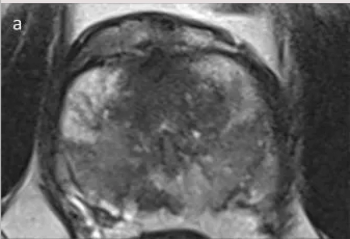
Two-thirds of men with a positive screening MRI for prostate cancer had PSA levels below 3 ng/mL and 91 percent of these men had clinically significant prostate cancer, according to newly published research.
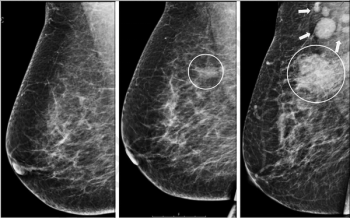
Primary diagnostic delays in mammography screening led to a greater than 10 percent higher incidence of lymph node metastasis with invasive breast cancer in comparison to women without a primary diagnostic delay, according to new research out of the Netherlands.

In interviews at the Society of Nuclear Medicine and Molecular Imaging (SNMMI) conference, researchers discussed the potential impact of ultra-high resolution brain positron emission tomography (PET) as well as emerging PET radiotracers for detecting coronary artery disease in obese patients and diagnosing clear cell renal cell carcinoma.
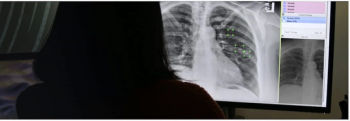
The artificial intelligence (AI)-enabled VisiRad XR reportedly demonstrated an 83 percent sensitivity rate for detecting lung nodules and masses on chest X-rays in one retrospective study.
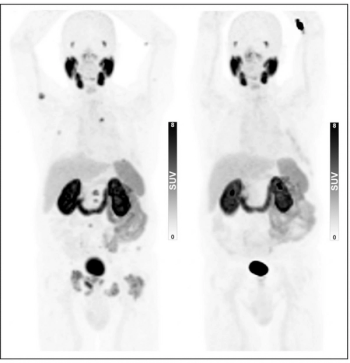
For patients 80 years of age or older that have a PSA level at 20 ng/mL or higher, PSMA PET/CT has a high likelihood of success in diagnosing and staging prostate cancer regardless of pre-imaging biopsy use, according to newly published research.
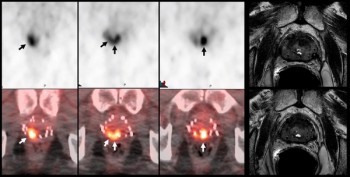
In an analysis of patients with intraprostatic/prostate bed findings of biochemical prostate cancer recurrence, the use of 18F-DCFPyL PET/CT led to an 82.3 percent cancer detection rate in comparison to 80 percent for multiparametric MRI, according to research presented at the recent Society for Nuclear Medicine and Molecular Imaging (SNMMI) conference.
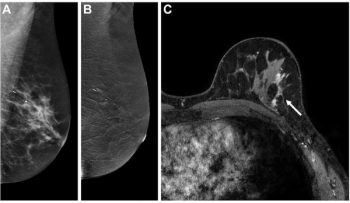
In a new study comparing standard breast MRI, abbreviated breast MRI and contrast-enhanced mammography in supplemental breast cancer screening, researchers found that MRI offered a greater than 14 percent higher cancer detection rate and a nearly 39 percent higher sensitivity rate than CEM.

The De Novo approval for Viz HCM, which assesses electrocardiograms with artificial intelligence (AI) to identify possible cases of hypertrophic cardiomyopathy (HCM), is the 12th FDA clearance of algorithms on the Viz.ai Platform.
In the first episode of a three-part series, Anand Narayan, M.D., Ph.D., and Amy Patel, M.D., discuss recently issued updates to breast cancer screening recommendations from the American College of Radiology and the United States Preventive Services Task Force and potential implications for health equity.
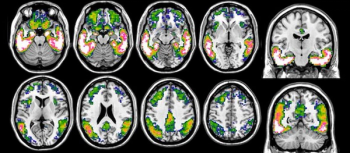
In a recent study examining neuroimaging biomarkers of Alzheimer’s disease, researchers found that neocortical tau pathology exhibited the strongest association with cognitive decline and the use of tau positron emission tomography (tau-PET) provided the best prognostic value of all neuroimaging modalities in this patient population.
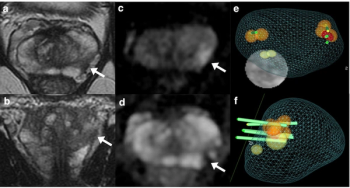
The use of non-contrast, biparametric MRI (bpMRI) for prostate cancer screening regardless of PSA values detected more clinically significant cases of prostate cancer than reserving bpMRI for patients with elevated PSA levels, according to preliminary findings from an ongoing prospective, randomized study.
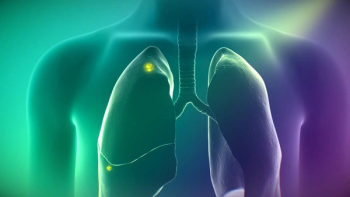
Through a new technology add-on payment (NTAP), the use of Cytalux will reportedly be reimbursed by CMS up to 65 percent of the cost of the molecular imaging agent, which is FDA-approved for intraoperative imaging of ovarian and lung cancer.
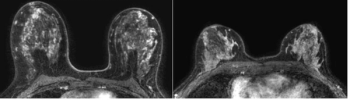
Emerging research suggests that a high volume of enhancing parenchyma on dynamic contrast-enhanced MRI more than doubles the breast cancer risk for women with extremely dense breasts.
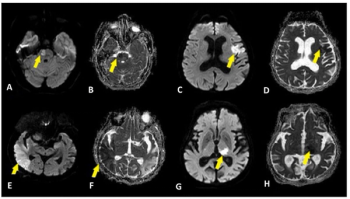
The most common brain MRI findings associated with COVID-19 included acute/subacute infarction in 22 percent of patients and cerebral microbleeds in 17 percent of patients.
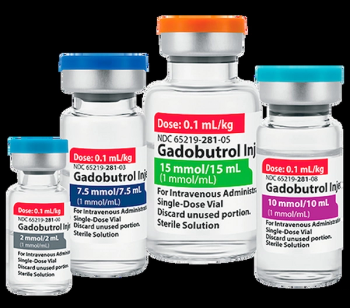
The indications for Gadobutrol injection, a generic substitute for Gadavist, include neurovascular and cardiovascular assessments as well as breast malignancy detection with magnetic resonance imaging (MRI).

In a video interview, Hong Song, M.D., Ph.D., discussed retrospective research, presented at the recent Society for Nuclear Medicine and Molecular Imaging (SNMMI) conference, that evaluated the combination of artificial intelligence (AI)-based software and the PSMA agent piflufolastat F 18 to help quantify prostate cancer lesions and associations with biochemical progression-free survival.

The controversial Independent Dispute Resolution (IDR) process of the No Surprises Act was temporarily suspended by the CMS on August 4 due to a federal court ruling that vacated a substantial administrative fee increase and batching rule from the CMS that reportedly curtailed challenges of claim reimbursement by radiologists and other providers.