


Women's Health MRI
Latest News

Study Questions Utility of Ultrafast Breast MRI for Challenging Lesions and Moderate/Marked BPE
By Jeff Hall

What a New MRI Meta-Analysis Reveals About AI-Powered Hippocampal Segmentation and Alzheimer’s Disease
By Jeff Hall
Advertisement
Latest Videos


CME Content







Advertisement
More News
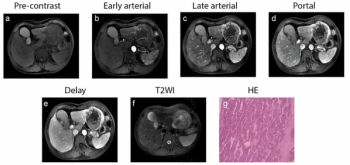
New research revealed that Hispanic Americans with evidence of hepatic steatosis on MRI but no formal diagnosis of MASLD had over a fourfold higher risk of developing hepatocellular carcinoma in comparison to those who had a formal diagnosis of MASLD.
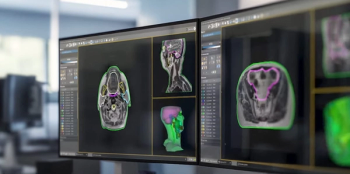
Capable of segmenting over 37 organs and structures in the head, neck and pelvis, the MR Contour DL software is currently being showcased at the European Society for Radiotherapy and Oncology (ESTRO) conference.
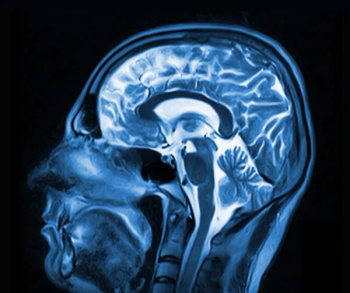
Emerging MRI research suggests that brain age is nearly two years older than chronological age for people with metabolic dysfunction-associated steatotic liver disease (MASLD) and increased alcohol intake.
Preoperative breast MRI had no impact upon recurrence-free survival and overall survival for women with HER-2 positive, hormone receptor-negative breast cancer, according to a multivariable analysis of a new study involving nearly 1,100 women.
Catch up on the top radiology content of the past week.
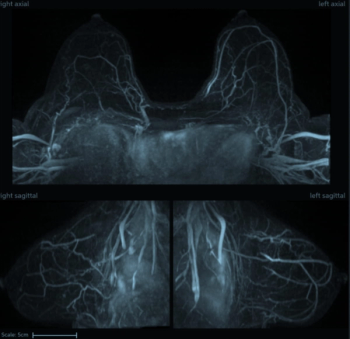
An artificial intelligence algorithm for dynamic contrast-enhanced breast MRI offered a 93.9 percent AUC for breast cancer detection, and a 92.3 percent sensitivity in BI-RADS 3 cases, according to new research presented at the Society for Breast Imaging (SBI) conference.

Catch up on the top AI-related news and research in radiology over the past month.
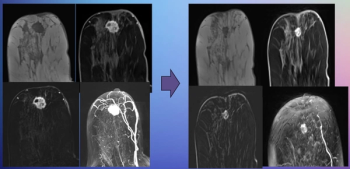
New research presented at the Society for Breast Imaging (SBI) conference suggests that abbreviated MRI is comparable to full MRI in assessing pathologic complete response to neoadjuvant chemotherapy for breast cancer.
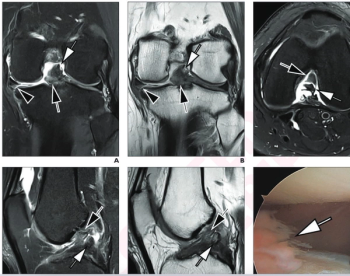
Employing deep learning image reconstruction, parallel imaging and multi-slice acceleration in a sub-five-minute 3T knee MRI, researchers noted 100 percent sensitivity and 99 percent specificity for anterior cruciate ligament (ACL) tears.
In a recent interview, Arjun Sahgal, M.D., discussed current and emerging research examining the potential of MRI-guided adaptive radiotherapy for treating glioblastomas.
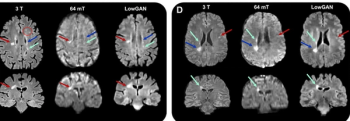
In comparison to native 64-mT MRI, the deep learning generative model LowGAN offered enhanced white matter lesion conspicuity and image quality in a study involving patients with multiple sclerosis.
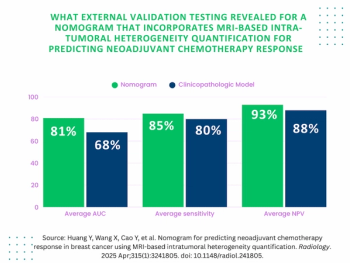
An emerging nomogram model for intra-tumoral heterogeneity quantification with breast MRI demonstrated an average 85 percent sensitivity in external validation testing for predicting pathologic complete response to neoadjuvant chemotherapy for breast cancer.
Catch up on the top radiology content of the past week.
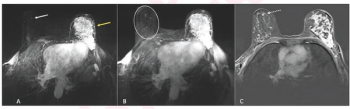
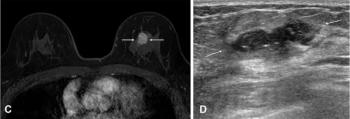
In a new study involving over 120 women, nearly two-thirds of whom had a family history of breast cancer, ultrafast MRI findings revealed a 5 percent increase in malignancy risk for each second increase in the difference between lesion and background parenchymal enhancement (BPE) time to enhancement (TTE).
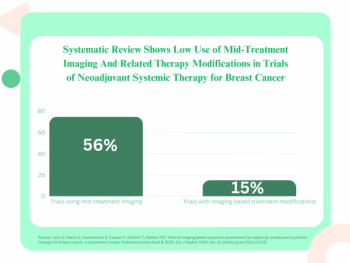
A systematic review of 147 clinical trials assessing neoadjuvant systemic therapy for breast cancer also revealed that mid-treatment imaging was utilized in 56 percent of the studies.
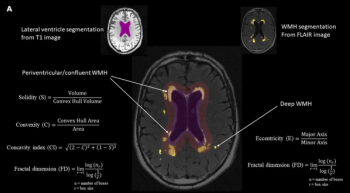
Emerging research demonstrated that cognitive declines in memory, executive function and processing speed domains were associated with irregular shape of periventricular/confluent white matter hyperintensities.
Catch up on the top radiology content of the past week.
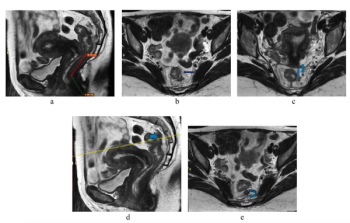
Abbreviated MRI demonstrated a 95.3 percent specificity for rectal cancer and provided strong agreement with the full MRI protocol for T staging and detection of extramural venous invasion, according to newly published research.
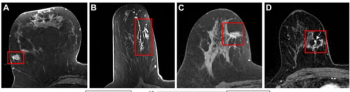
New multicenter research suggests that radiomic features derived from breast MRI may enhance prognostic capabilities with disease upstaging for ductal carcinoma in situ (DCIS).
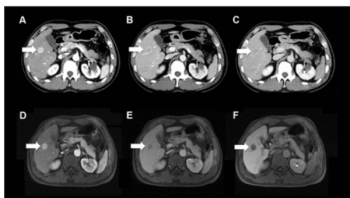
LI-RADS category 5 (LR-5) assessment had an 11 percent higher AUC for detecting hepatocellular carcinoma (HCC) in patients with non-cirrhotic chronic hepatitis C (CHC) in comparison to those with cirrhotic CHC.
Catch up on the most-well viewed radiology content in March 2025.
Catch up on the top radiology content of the past week.
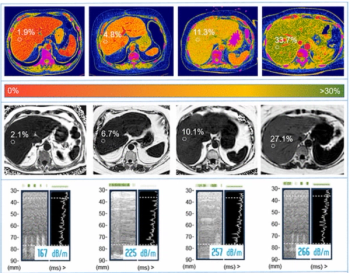
Photon-counting CT fat fraction evaluation offered a maximum sensitivity of 81 percent for detecting steatosis and had a 91 percent ICC agreement with MRI proton density fat fraction assessment, according to new prospective research.
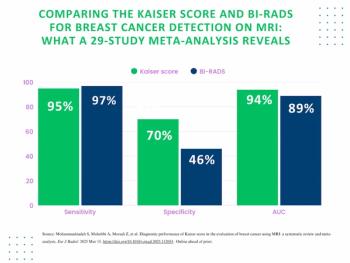
The Kaiser score offers 24 percent higher pooled specificity than the Breast Imaging Reporting and Data System (BI-RADS) for detecting malignancies on breast MRI, according to a 29-study meta-analysis.
Catch up on the top radiology content of the past week.
Advertisement
Advertisement
Trending on Diagnostic Imaging
1
Leading Breast Radiologists Discuss the Recent Lancet Study on AI and Interval Breast Cancer
2
Is AI Better Than Neuroradiologists at Evaluating Aneurysm Growth on CTA and MRA Scans?
3
FDA Clears AI-Powered Triage Platform for Digital Breast Tomosynthesis
4
FDA Clears 3T MRI Device for Neonates and Infants
5