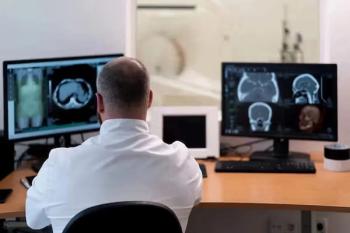
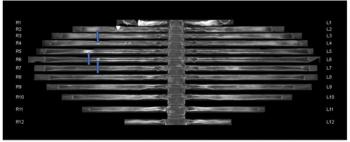
The use of adjunctive CT bone reading software in women with breast cancer detected between 8 to 22 percent more metastatic lesions for reviewing radiologists and reduced CT interpretation time by 50 percent or more, according to a new study.
A legislative attempt to eliminate in-office imaging self-referral remains alive, even though an attempt this week to add it to a comprehensive health reform bill in the House Energy and Commerce Committee failed.
A legislative attempt to eliminate in-office imaging self-referral remains alive, even though an attempt this week to add it to a comprehensive health reform bill in the House Energy and Commerce Committee failed.
Though dead in the House of Representatives in its present form, an amendment to eliminate the in-office service exception to the federal self-referral law remains alive and kicking for consideration during future healthcare reform debate in Congress, according to the American College of Radiology.
"We are looking at other ways of addressing this issue," said ACR director of congressional affairs Ariel González, in an interview with Diagnostic Imaging.
Reps. Anthony Weiner (D-NY) and Bruce Braley (D-IA) offered their amendment to close the in-office ancillary services exception Sept. 23 during discussion of HR 3200, the House healthcare reform bill. Lawmakers highlighted the financial conflicts of interest for physicians who own and operate imaging equipment in their offices. Weiner and Braley withdrew the amendment for consideration before the session closed, however, because of growing opposition from nonradiology physician groups.
Despite the setback, the amendment created an opportunity for ACR members, González said.
"Rep. Weiner received a commitment from House E&C Committee chair Henry A. Waxman (D-CA) to further examine the issue moving forward in the healthcare reform debate," he said.
The ACR will also ask lawmakers to consider a policy of "enhanced disclosure," which mirrors a provision in the bill released by the Senate Finance Committee last week, González said. The Senate's "imaging self-referral sunshine" provision requires physicians who engage in in-office self-referral to inform patients about their ownership interest. It also requires these physicians to provide patients with alternatives for their imaging exams.
"That's a good first step. But we feel there needs to be stronger language within both the House and the Senate bills," González said.
More members of Congress need to be educated on the issue to create a better environment for a full-fledged self-referral amendment, González said. Self-referral opponents plan to assemble more data related to the financial costs of in-office services to work in that direction.
"We are hoping for that," he said.